
In offshore oil and gas, keeping assets in good shape is everything. The massive topsides, complex subsea systems, and advanced drilling equipment usually steal the spotlight, but it’s the less visible areas—the hull spaces and ballast tanks—that are constantly doing the hard work. Day in and day out, they’re fighting a quiet battle against their biggest threat: corrosion caused by moisture.
Offshore rigs operate in an environment defined by high relative humidity (RH), temperature fluctuations, and constant exposure to saline air. This can accelerate deterioration in other parts of a rig, such as ballast tanks, cofferdams, chain lockers, and lower hull spaces.
Once humidity breaches the critical threshold, rust and microbial activity become inevitable. This corrosion leads to coating failure, reduced structural integrity, costly steel replacement, and massive downtime. To truly preserve these multi-billion dollar assets, operators must move beyond reactive maintenance and adopt desiccant dehumidification (DD).
The Corrosion Threshold: Why Standard Ventilation Fails
Corrosion is not a continuous process; it is critically dependent on the environment’s moisture content. The consensus in corrosion science establishes a clear threshold: when the relative humidity of the air surrounding steel drops below 45% (and ideally 40%), the rate of corrosion slows to near zero.
Achieving and maintaining this low-humidity environment in offshore hull spaces is the ultimate challenge.
Limitations of Conventional Methods
Many operators rely on conventional moisture control methods that do not provide the proper operation for the offshore environment:
- Natural Ventilation: Opening hatches or using simple exhaust fans often draws in ambient offshore air, which can have an RH exceeding 90%. This process often introduces more moisture than it removes.
- Refrigerant Dehumidifiers: These units work by chilling air below its dew point to condense out moisture. While effective in warmer, smaller rooms, they lose efficiency drastically in large volumes and struggle to achieve RH levels below 50%. Critically, they are ineffective in the lower temperatures often found in submerged or partially submerged hull sections.
- Heating: Applying heat to the confined space lowers the relative humidity, but it doesn’t remove the absolute water vapor content. This method is expensive to run in large volumes and, once the heat source is removed, the temperature drops and the RH immediately spikes, leading to rapid flash rusting.
The fundamental failure of these methods is their inability to achieve the low dew points required to stop corrosion. This is where the physics of desiccant technology provides a revolutionary answer.
Desiccant Dehumidifiers in Hull Spaces and Ballast Compartments
One of the most overlooked areas for humidity control on offshore rigs and floating platforms is the hull space. These sealed or semi-sealed steel compartments—found in jack-ups, semi-submersibles, and FPSOs—act as the structural backbone of the vessel. They support heavy topside loads and provide buoyancy and stability. Yet, inside those compartments lies a perfect storm for corrosion.
Even in well-coated hulls, temperature fluctuations and moisture intrusion are constant threats. Warm, humid air drawn in during ballast operations or maintenance can condense on cooler steel surfaces as temperatures drop, forming water films that accelerate rust and pitting. Add to that the presence of salt and oxygen, and you have a recipe for deep corrosion that spreads unseen behind coatings and insulation.
The Hidden Cost of Moisture in Hull Spaces
Unchecked humidity in hull compartments can lead to:
- Structural degradation: Corrosion weakens bulkheads, stiffeners, and stringers, compromising the vessel’s integrity.
- Reduced coating life: Even high-performance marine coatings deteriorate faster in damp conditions.
- Contaminated ballast water: Moisture can promote microbial growth and sludge accumulation.
- Electrical hazards: Many hull compartments contain lighting, sensors, or cabling that can short or fail under humid conditions.
Because these compartments are confined and often difficult to inspect regularly, moisture problems can go unnoticed for years—until they demand costly repairs or trigger classification issues during inspection or drydock.
Why Desiccant Dehumidification Work Best Here
Explosion-proof desiccant dehumidifiers are the preferred solution for keeping hull spaces and ballast tanks dry be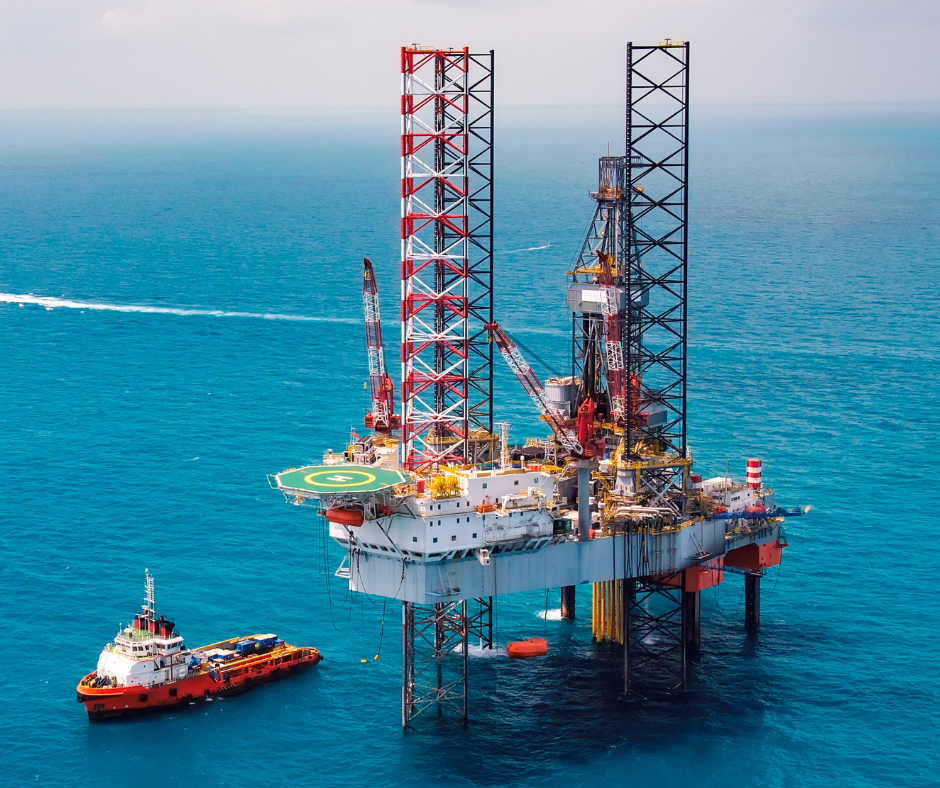 cause they deliver continuous, low-dew-point air circulation. Unlike refrigerant systems, which lose efficiency in cool or variable temperatures, desiccant systems perform consistently regardless of ambient conditions.
Dry air from a desiccant unit can be ducted throughout multiple hull compartments, maintaining a dew point below the temperature of the steel surfaces, which completely prevents condensation from forming. This dry-air method not only halts corrosion but also preserves coatings and insulation, extends inspection intervals, and reduces the need for frequent blasting and repainting.
For vessels in cold standby, lay-up, or long-term storage, desiccant dehumidification is even more valuable. Keeping hull and ballast compartments dry eliminates the need to pressurize with inert gases or periodically recoat interior surfaces. The equipment quietly does its job in the background, protecting the asset and avoiding costly reactivation work later.
Explosion-Proof Design for Hazardous Zones
Since hull spaces and ballast compartments can contain residual vapors from fuel or process fluids, only explosion-proof-rated dehumidifiers should be used. These units feature sealed electrical enclosures, flame-proof motors, and corrosion-resistant components that meet offshore hazardous-area certifications like NEC Class I, Division 1/2 or IECEx/ATEX Zone 1/2.
In short, an explosion-proof desiccant dehumidifier in a hull space is more than a corrosion solution—it’s a structural preservation system. It ensures that the vessel’s foundation stays dry, safe, and strong for decades of service in a saltwater environment that never takes a day off.
Safety, Operational Excellence, and ROI
The case for desiccant dehumidification on an offshore rig is more than simple rust prevention; it is a driver of safety, regulatory compliance, and significant cost savings.
Safety and Compliance
Working in enclosed spaces is inherently dangerous. Condensation creates slip hazards and fosters an environment for mold and mildew. By maintaining a consistently dry atmosphere, desiccant dehumidification improves working conditions. Additionally, all desiccant dehumidifier equipment utilized offshore must be ATEX or IECEx certified for use in hazardous areas (Zone 1 or Zone 2) to ensure no ignition sources are introduced.
Operational Superiority and Efficiency
When a ballast tank needs inspection or work, the biggest time sink is often the preparation. With desiccant dehumidifiers, drying times are drastically reduced from days or weeks to mere hours, enabling:
- Accelerated Turnarounds: Faster transition from wet to dry, shrinking maintenance windows and maximizing rig uptime.
- Predictable Scheduling: Maintenance can proceed regardless of external weather or humidity, eliminating schedule uncertainty.
- Extended Coating Life: A coating that cures under ideal, dry conditions lasts years longer than one cured in high humidity. Doubling the lifespan of a coating system in a ballast tank represents millions in savings over the life of the asset.
The Return on Investment (ROI)
While the capital cost of industrial-grade, hazardous-area certified desiccant units is substantial, the ROI is compelling:
- Reduced Steel Replacement: Preventing corrosion eliminates the need for expensive, time-consuming welding, steel cutting, and hot work permits, which is the largest cost driver in hull maintenance.
- Lower Operating Costs: DD units are often more energy-efficient than traditional HVAC systems when designed for target low RH levels. Once the space is dry, they cycle down and require less energy to maintain the low RH setpoint.
- Avoided Downtime: The cost of unplanned rig downtime can run into the millions of dollars per day. By proactively safeguarding structural integrity, DD dramatically reduces the risk of such events.
Conclusion
The challenge of corrosion in offshore hull spaces is not just an inconvenience; it is a structural and financial threat. Desiccant dehumidification is the most effective environmental control measure available. By achieving and maintaining the critical low-humidity threshold (below 45% RH), desiccant dehumidification effectively halts the corrosion process, prolongs the life of protective coatings, ensures safer working environments, and drastically reduces the financial burden of reactive steel renewal.
For offshore operators seeking to maximize asset longevity and operational efficiency, investing in the technology that delivers truly dry air is no longer a luxury—it is an engineering imperative. The integrity of the structure depends on winning the silent war against moisture, and the desiccant dehumidifier is the definitive weapon in that fight. Contact one of our engineer experts today to get the right equipment for your offshore drill unit.