
Eldridge designs and supplies ventilation, cooling, and acoustic noise control systems for power plants, gas turbine packages, reciprocating engine generators, and nuclear facilities. Our engineers calculate heat loads and acoustics to specify fans, louvers, dampers, filters, heaters, and silencers. The goal is equipment that stays cool, runs reliably, and meets both OSHA worker-noise limits and community noise limits at the property line.
For decades, Eldridge has supplied design services and equipment to some of the world’s largest power generation companies. Our gas turbine enclosure cooling designs helped set the approach that many installations still use today. We serve customers across the United States and internationally from our headquarters in Katy, Texas.
Why Power Plant Ventilation Matters
Gas turbines, generators, and reciprocating engines turn fuel into electricity, and they shed a large share of that energy as heat. If that heat stays inside an enclosure or turbine hall, it causes real damage. It shortens the life of bearings, seals, wiring insulation, and electronic controls. It can trigger high-temperature alarms and unplanned trips. It lets combustible gas build up inside turbine enclosures, which creates a safety hazard. And it raises the air temperature at the combustion inlet, which reduces output.
A well-designed ventilation system handles four jobs at once. It removes heat, dilutes and exhausts any leaked gas, keeps positive or negative pressure where the design calls for it, and does all of this without adding excessive noise.
Our Engineering Approach
Every power project starts with calculation, not a catalog. The work happens in four steps.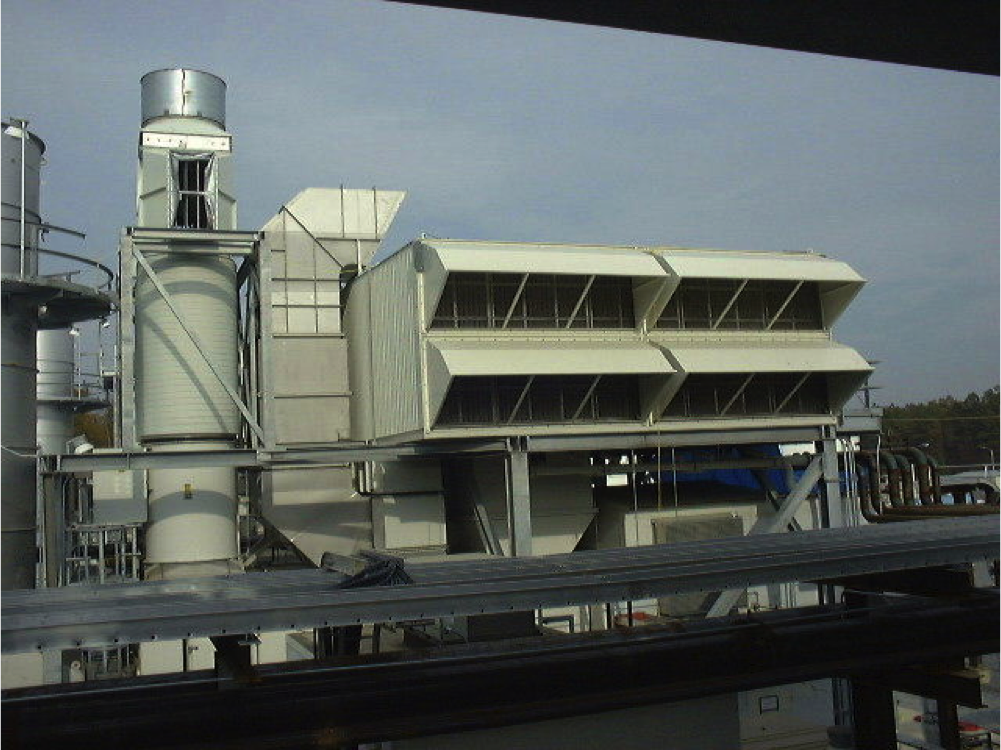
- Heat load analysis. We quantify heat from turbines, generators, engines, transformers, piping, and solar gain. From that we size airflow for the worst-case ambient temperature.
- Airflow and pressure design. We lay out supply and exhaust paths, and select louvers, dampers, and filters that meet the airflow target with minimal pressure drop.
- Acoustic analysis. We predict the noise from each source and each opening, then design silencers and enclosures to meet the project’s noise criteria.
- Equipment selection and project management. We specify, supply, and coordinate the full system. That way fans, silencers, and airflow components are matched to each other instead of sourced piecemeal.
Power Generation Applications
- Gas turbine enclosures and packages, including aeroderivative and industrial frame units
- Reciprocating engine gensets for baseload, peaking, and backup power
- Combined cycle and simple cycle plants
- Nuclear power stations, including auxiliary building and equipment room ventilation
- Generator and switchgear buildings
- Compressor stations and fuel gas conditioning skids
- Backup and emergency generator rooms for data centers, hospitals, and critical facilities
Ventilation & Cooling Products for Power Plants
- Axial fans for supply and exhaust ventilation, including heavy-duty models
- Centrifugal fans and blowers for process air and high static pressure systems
- Louvers, including storm-resistant and acoustic louvers
- Dampers for isolation, control, and fire and gas shutoff
- Air filters and enclosures that protect equipment from dust, salt, and debris
- Gravity ventilators for passive relief and exhaust
- Gas-fired and electric heaters for cold-weather freeze protection
- Acoustic silencers and noise control systems (details below)
Power Plant Noise Control
Power generation equipment is among the loudest equipment in any industry. Uncontrolled noise causes two separate problems. It puts workers at risk of permanent hearing loss, and it pushes sound past the property line into nearby neighborhoods. That can lead to complaints, permit violations, and operating restrictions.
Ventilation and noise control have to be designed together. Every air opening in an enclosure is also a path for sound to escape. And every silencer added to an airflow path adds pressure drop that the fans must overcome.
Where Power Plant Noise Comes From
- Gas turbine air inlets give off strong high-frequency tones from the compressor blades.
- Turbine and engine exhaust produces intense low-frequency noise, the rumble that travels long distances and passes easily through walls.
- Enclosure ventilation openings let turbine and generator noise escape through the same louvers that let cooling air in and out.
- Ventilation and cooling fans add their own blade-pass tones and broadband noise.
- Steam vents, relief valves, and gas blowdowns release high-pressure flow that can be among the loudest events at a site.
- Radiators and cooling modules on reciprocating engine gensets generate fan and airflow noise.
- Transformers produce a steady low-frequency hum.
Noise Limits Power Plants Must Meet
Most projects must satisfy two sets of limits.
Worker exposure. OSHA requires a hearing conservation program when workers are exposed to an 8-hour time-weighted average of 85 dBA or more. The permissible exposure limit is 90 dBA over 8 hours. Equipment specifications commonly set a near-field limit, often 85 dBA at 1 meter (about 3 feet), to keep work areas below these thresholds.
Community and permit limits. Local ordinances, state regulations, and air or siting permits often cap sound levels at the property line or at the nearest home. These limits are frequently stricter at night. Low-frequency exhaust noise is usually the hardest part of meeting them.
Noise Control Solutions
We match the silencer technology to the frequency, temperature, and pressure conditions of each noise source.
- Absorptive (dissipative) silencers use acoustic fill inside perforated baffles to absorb mid- and high-frequency noise. They suit turbine inlets, ventilation intakes, and fan discharges.
- Reactive silencers use chambers and tuned internal geometry to reflect and cancel low-frequency sound. They suit reciprocating engine exhaust.
- Combination silencers pair absorptive and reactive sections for sources that are loud across the whole frequency range.
- Turbine and engine exhaust silencers are built for high temperatures and thermal cycling.
- Ventilation silencers go on enclosure supply and exhaust openings.
- Fan silencers reduce fan noise at the inlet and discharge.
- High-pressure vent and blowdown silencers handle steam and gas releases, and are available built to ASME code.
- Acoustic louvers let air through while blocking sound at building and enclosure walls.
- Acoustic enclosures and barrier walls contain noise at the source.
- Sound-dampening panels and vibration isolation cut structure-borne noise.
How We Engineer Noise Control
- Define the target. We confirm the noise criteria from OSHA, the equipment specification, permits, or local ordinances.
- Measure or predict. We use site sound surveys or manufacturer data, broken into octave bands, to identify the frequencies that need treatment.
- Model the system. We calculate how much reduction each source and opening needs to meet the target at each receiver location.
- Balance attenuation and airflow. We size silencers to hit the acoustic target at the lowest practical pressure drop. This protects fan performance and keeps energy costs down.
- Select durable materials. We choose fill, facings, and steel for the temperature, moisture, and corrosion conditions at the site.
- Verify. We support post-installation sound testing to confirm results.
Frequently Asked Questions
How much ventilation does a gas turbine enclosure need?
It depends on the heat the turbine and generator reject, the maximum ambient temperature, and the allowable temperature rise inside the enclosure. Many turbine enclosures also need a minimum number of air changes to dilute any leaked fuel gas. Eldridge calculates both requirements and designs for the higher one.
What is the difference between absorptive and reactive silencers?
Absorptive silencers use sound-absorbing fill to reduce mid- and high-frequency noise, like turbine inlet and fan noise. Reactive silencers use chambers and tuned geometry to reduce low-frequency noise, like reciprocating engine exhaust. Many power applications use a combination of the two.
Do silencers reduce airflow?
Every silencer adds some pressure drop. Good design keeps it small by sizing the silencer’s open area and baffle spacing correctly, then selecting fans that account for it. Eldridge designs the fans, louvers, and silencers together so the system meets both its airflow and noise targets.
What noise level do power plants have to meet?
Worker-area limits are driven by OSHA. A hearing conservation program is required at 85 dBA averaged over 8 hours, and the exposure limit is 90 dBA. Property-line limits come from local ordinances and permits and vary by location. They are often much lower, especially at night.
Can you add noise control to an existing plant?
Yes. Retrofit silencers, acoustic louvers, and enclosures can be added to existing turbine packages, generator buildings, and ventilation systems. A sound survey identifies which sources and openings to treat first.
Where is Eldridge located?
Eldridge is headquartered at 23035 Elkana Deane Ln, Katy, Texas 77449, near Houston. We support power generation projects nationwide and internationally. Call 1-844-780-7200 or request a quote.
Talk to a Power Plant Ventilation & Acoustics Engineer
Planning a new turbine package, expanding a plant, or dealing with a noise complaint? Our engineers can review your heat loads, airflow, and noise criteria and recommend a complete solution.