
Modern data centers require more than traditional heating and cooling. As computing power, equipment density, and power requirements continue to increase, facilities need carefully engineered systems to manage heat, airflow, humidity, air quality, static pressure, and acoustics.
Eldridge provides industrial ventilation design and equipment solutions for data centers and other critical environments. Our team can evaluate facility requirements, perform heat-load and fluid-flow analysis, specify ventilation equipment, and help manage projects from design through installation and start-up.
Whether you are developing a new data center, expanding an existing facility, or upgrading ventilation around on-site power-generation equipment, Eldridge can help develop a ventilation strategy based on the specific requirements of your facility.
What Is Data Center Industrial Ventilation?
Data center industrial ventilation is the engineered movement, supply, exhaust, filtration, and conditioning of air within a data center or associated equipment spaces.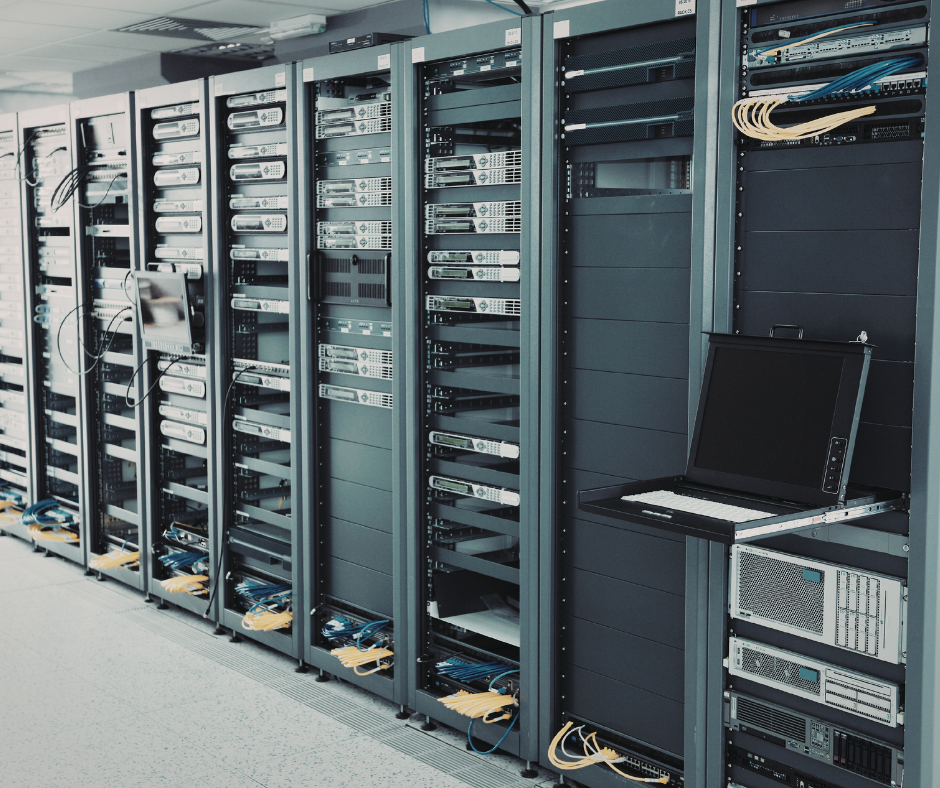
Unlike general building ventilation, data center environments have highly specific requirements. Servers, electrical equipment, generators, turbines, and other infrastructure can generate substantial heat and require controlled environmental conditions.
A properly designed industrial ventilation system can help manage:
- Heat loads
- Airflow and air changes
- Temperature
- Humidity
- Static pressure
- Outdoor air
- Airborne contaminants
- Equipment-room conditions
- Noise and acoustics
- Generator and gas-turbine ventilation
The appropriate system depends on the facility layout, equipment, operating conditions, climate, heat generation, airflow requirements, and other project-specific factors.
Why Is Industrial Ventilation Important for Data Centers?
Data centers operate as critical environments where environmental conditions can directly affect sensitive equipment and facility operations.
High-density computing equipment produces significant heat. Additional heat can come from electrical infrastructure and on-site power-generation equipment. Without an appropriate strategy for managing that heat and moving air through the facility, equipment spaces can experience undesirable temperature and pressure conditions.
Ventilation design also becomes important when data centers incorporate generators, gas turbines, or other power-generation systems.
An engineered approach considers the facility as a complete airflow system rather than selecting individual fans or ventilation components in isolation.
Data Center Ventilation Challenges
Every data center has different ventilation requirements, but several challenges are common across projects.
Managing High Heat Loads
Heat management is one of the most important considerations in data center environmental design.
Computing equipment and supporting infrastructure generate heat continuously. As equipment density increases, the amount of heat that must be managed can also increase.
Industrial ventilation can be incorporated into the overall environmental strategy to help remove heat from equipment areas and maintain appropriate operating conditions.
Eldridge’s ventilation design capabilities include heat-load evaluation, allowing the ventilation system to be evaluated according to the actual requirements of the facility.
Maintaining Proper Airflow
Moving the required amount of air through a data center requires more than simply selecting a fan based on its advertised CFM rating.
The complete airflow path can include fans, blowers, louvers, dampers, filters, ductwork, enclosures, and other components. Static pressure and system resistance can affect the actual performance of the ventilation system.
Eldridge uses fluid-flow analysis to evaluate ventilation systems and determine how equipment operates as part of the overall system.
Controlling Humidity
Humidity can be an important consideration in critical environments.
Too much moisture can contribute to condensation and moisture-related concerns, while excessively dry conditions can create other environmental challenges.
Depending on the application, industrial dehumidification equipment may be incorporated into a broader ventilation and climate-control strategy.
Managing Air Quality and Filtration
Outdoor air can introduce dust and other airborne particles into a facility.
Data center ventilation systems may therefore require filtration strategies based on the facility’s location, environmental conditions, equipment requirements, and overall design.
Eldridge provides industrial air filtration equipment as part of its broader ventilation capabilities.
Addressing Noise
Fans, blowers, generators, gas turbines, and other mechanical equipment can create significant noise.
For data centers located near commercial, industrial, or residential areas, acoustic requirements may need to be addressed during the design process rather than after equipment has been installed.
Eldridge’s ventilation design process includes acoustic evaluation and noise-control considerations.
Industrial Ventilation Solutions for Data Centers
There is no single ventilation configuration that works for every data center.
Depending on the application, a system may incorporate several types of equipment working together.
Industrial Fans and Blowers
Supply and exhaust fans help move air through equipment spaces and ventilation systems.
Centrifugal fans and blowers may be used where the application requires specific airflow and static-pressure performance.
Fan selection should account for the complete system rather than airflow alone.
Louvers and Dampers
Louvers can control the movement of outside air into and out of a facility, while dampers can be used to regulate airflow through different sections of a ventilation system.
Proper selection and placement are important for achieving the intended airflow and system performance.
Air Filtration
Air filtration systems can help remove particulate matter from incoming air.
The appropriate filtration strategy depends on the facility’s environmental conditions and the requirements of the application.
Dehumidification
Industrial dehumidifiers can help control moisture levels where humidity management is required.
Data centers and other critical environments may require carefully coordinated temperature and humidity control as part of the overall environmental strategy.
Ventilation Silencers and Acoustic Equipment
Where noise is a concern, silencers and other acoustic solutions can be incorporated into the ventilation system.
Acoustic considerations can be particularly important for data centers with large ventilation equipment or on-site power-generation systems.
Data Center Ventilation for On-Site Power Generation
The growth of high-density computing and AI infrastructure has increased interest in on-site power generation for some data center projects.
Natural-gas turbines and other power-generation technologies can introduce additional ventilation requirements, particularly when generating equipment is installed inside an enclosed structure.
Gas turbines generate substantial heat, which means the ventilation system must be designed around the turbine’s heat output, airflow requirements, equipment configuration, and operating environment.
A gas turbine ventilation system may incorporate:
- Supply fans
- Exhaust fans
- Centrifugal blowers
- Louvers
- Dampers
- Filters
- Acoustic silencers
- Other airflow-control equipment
The ventilation system should be considered alongside the power-generation equipment rather than treated as a separate afterthought.
Eldridge’s engineering capabilities include heat-load evaluation, fluid-flow analysis, acoustic evaluation, equipment specification, and system design for ventilation applications associated with power generation.
How Is a Data Center Ventilation System Designed?
Effective data center ventilation begins with understanding the facility and its specific operating requirements.
Eldridge’s ventilation design process can include:
- On-site ventilation survey – Evaluate the existing facility, equipment, airflow conditions, and project requirements.
- Heat-load evaluation – Determine the amount of heat that needs to be managed.
- Fluid-flow analysis – Evaluate airflow through the complete ventilation system.
- Acoustic evaluation – Identify potential noise concerns and appropriate control measures.
- System design – Develop a ventilation strategy based on facility requirements.
- Equipment specification – Select appropriate fans, blowers, filters, louvers, dampers, dehumidifiers, and other equipment.
- Project management – Coordinate equipment procurement and project implementation.
- Installation and start-up – Support implementation of the completed ventilation system.
Eldridge’s ventilation design capabilities also include CAD drawings and system analysis to help develop a complete ventilation solution.
Data Center Ventilation Design for New Construction
Ventilation should be considered early in the design of a new data center.
When ventilation requirements are evaluated during the planning and engineering stages, designers can account for equipment locations, airflow paths, heat loads, outdoor conditions, acoustics, and future expansion.
Early coordination can also help reduce the need for major ventilation modifications after construction is complete.
For new data centers, Eldridge can work with project teams to evaluate ventilation requirements and develop equipment specifications and system designs around the facility’s needs.
Upgrading Ventilation in Existing Data Centers
Existing data centers may require ventilation improvements as equipment loads increase, facilities expand, or environmental conditions change.
A ventilation assessment can help identify potential issues with:
- Insufficient airflow
- Excess heat
- Static pressure
- Humidity
- Air filtration
- Equipment capacity
- Noise
- Aging ventilation equipment
- Changes in equipment layout
Instead of automatically replacing individual components, an engineered assessment can evaluate how the existing system performs as a whole.
Why Choose Eldridge for Data Center Ventilation?
Data centers are among the critical environments where ventilation requirements can be particularly demanding.
Eldridge has provided industrial ventilation solutions since 1946 and approaches ventilation as a complete system rather than a collection of individual components.
Our capabilities include:
- Industrial ventilation design
- Heat-load evaluation
- Fluid-flow analysis
- Acoustic evaluation
- Industrial fan and blower selection
- Air filtration
- Dehumidification
- Louvers and dampers
- Noise-control solutions
- Equipment specification
- Project management
- Installation and start-up
From a new data center project to an existing facility requiring a ventilation upgrade, Eldridge can help evaluate the environmental requirements and develop a system around the application.
Frequently Asked Questions About Data Center Industrial Ventilation
What is industrial ventilation in a data center?
Industrial ventilation in a data center is the engineered movement and management of air to help control heat, airflow, humidity, air quality, static pressure, and other environmental conditions. The system may incorporate fans, blowers, filters, louvers, dampers, dehumidifiers, and other equipment.
Why do data centers need industrial ventilation?
Data centers contain equipment that produces significant amounts of heat and requires controlled environmental conditions. Industrial ventilation can help manage heat and airflow while supporting requirements for air quality, humidity, pressure, and acoustics.
What equipment is used in data center ventilation systems?
Depending on the application, data center ventilation systems may use industrial fans, centrifugal blowers, air filters, louvers, dampers, dehumidifiers, ventilation silencers, and other specialized equipment.
How does ventilation help manage data center heat?
Ventilation can help remove heat from equipment spaces by moving air through the facility according to the system’s required airflow and heat-load calculations. The specific approach depends on the heat generated, building configuration, equipment layout, and other environmental requirements.
Do data centers need humidity control?
Humidity control may be an important part of a data center’s environmental strategy. The appropriate approach depends on the facility’s equipment, climate, operating requirements, and overall environmental-control system.
How does filtration affect data center ventilation?
Air filtration can help reduce airborne particulate matter entering a facility. The type and level of filtration required depends on the data center’s location, outdoor conditions, equipment requirements, and system design.
How is gas turbine ventilation used in data centers?
Gas turbine ventilation systems can be used to manage the heat and airflow requirements associated with gas turbines used for on-site power generation. System design may incorporate supply and exhaust fans, blowers, louvers, dampers, filters, and acoustic equipment.
What should be considered when designing a data center ventilation system?
Important considerations include heat load, airflow, static pressure, equipment layout, humidity, filtration, outdoor conditions, acoustics, ventilation equipment, and the relationship between different areas of the facility.
Can Eldridge design ventilation systems for existing data centers?
Yes. Existing facilities can be evaluated to identify ventilation requirements and opportunities for system improvements. Eldridge’s capabilities include on-site ventilation surveys, heat-load evaluation, fluid-flow analysis, acoustic evaluation, equipment specification, project management, installation, and start-up.
Build a Data Center Ventilation System Around Your Facility
Data center ventilation requires an engineered approach that accounts for the facility’s equipment, heat load, airflow, environmental conditions, and operational requirements.
Whether you are planning a new data center, expanding an existing facility, upgrading ventilation equipment, or integrating ventilation with on-site power generation, Eldridge can help develop a solution based on your specific application.
Contact Eldridge to discuss your data center industrial ventilation requirements and request a project consultation.