
Excess humidity is one of the most overlooked threats in industrial environments. While many facility managers focus heavily on temperature control, moisture in the air can cause serious damage to equipment, stored products, and building infrastructure. Without proper humidity control, facilities can experience corrosion, mold growth, damaged inventory, reduced equipment lifespan, and costly operational downtime.
Industrial dehumidifiers are designed to solve these problems by removing excess moisture from the air and maintaining stable environmental conditions. From warehouses and manufacturing plants to food processing operations, industrial dehumidification systems help businesses protect valuable assets, improve efficiency, and reduce long-term operating costs.
At Eldridge, industrial dehumidifier solutions are designed to help facilities maintain proper relative humidity levels while preventing moisture-related issues such as corrosion, mold, rotting, and product deterioration.
Why Humidity Control Matters in Industrial Facilities
Humidity plays a major role in the overall health and performance of industrial environments. When relative humidity levels become too high, moisture begins accumulating throughout the facility.
Over time, excess humidity can lead to:
- Corrosion on industrial machinery and metal components
- Mold and mildew growth
- Damaged inventory and packaging
- Electrical equipment failures
- Condensation buildup
- Shortened equipment lifespan
These moisture-related issues can increase maintenance costs, reduce productivity, and create expensive operational disruptions.
Facilities in humid climates, especially along the Gulf Coast and in regions like Texas, are particularly vulnerable to these problems because warm, moisture-heavy air creates ideal conditions for condensation and corrosion.
Industrial dehumidifiers help facilities maintain stable humidity levels and prevent excess moisture from damaging equipment and inventory.
How Industrial Dehumidifiers Work
Industrial dehumidifiers are built specifically for demanding commercial and industrial applications where residential systems are not powerful enough to handle large-scale moisture control.
Eldridge offers two primary types of industrial dehumidification systems: refrigerant dehumidifiers and desiccant dehumidifiers. Each system is designed for different operating conditions and humidity requirements.
Refrigerant Industrial Dehumidifiers
Refrigerant dehumidifiers remove moisture by cooling humid air to its dew point. As the air cools, water vapor condenses on refrigerated coils and is removed from the environment.
These systems are commonly used in:
- Warehouses
- Manufacturing facilities
- Commercial buildings
- High-humidity industrial spaces
Refrigerant dehumidifiers work especially well in warmer environments with high moisture levels because they can efficiently remove humidity while also helping cool the surrounding air.
Desiccant Industrial Dehumidifiers
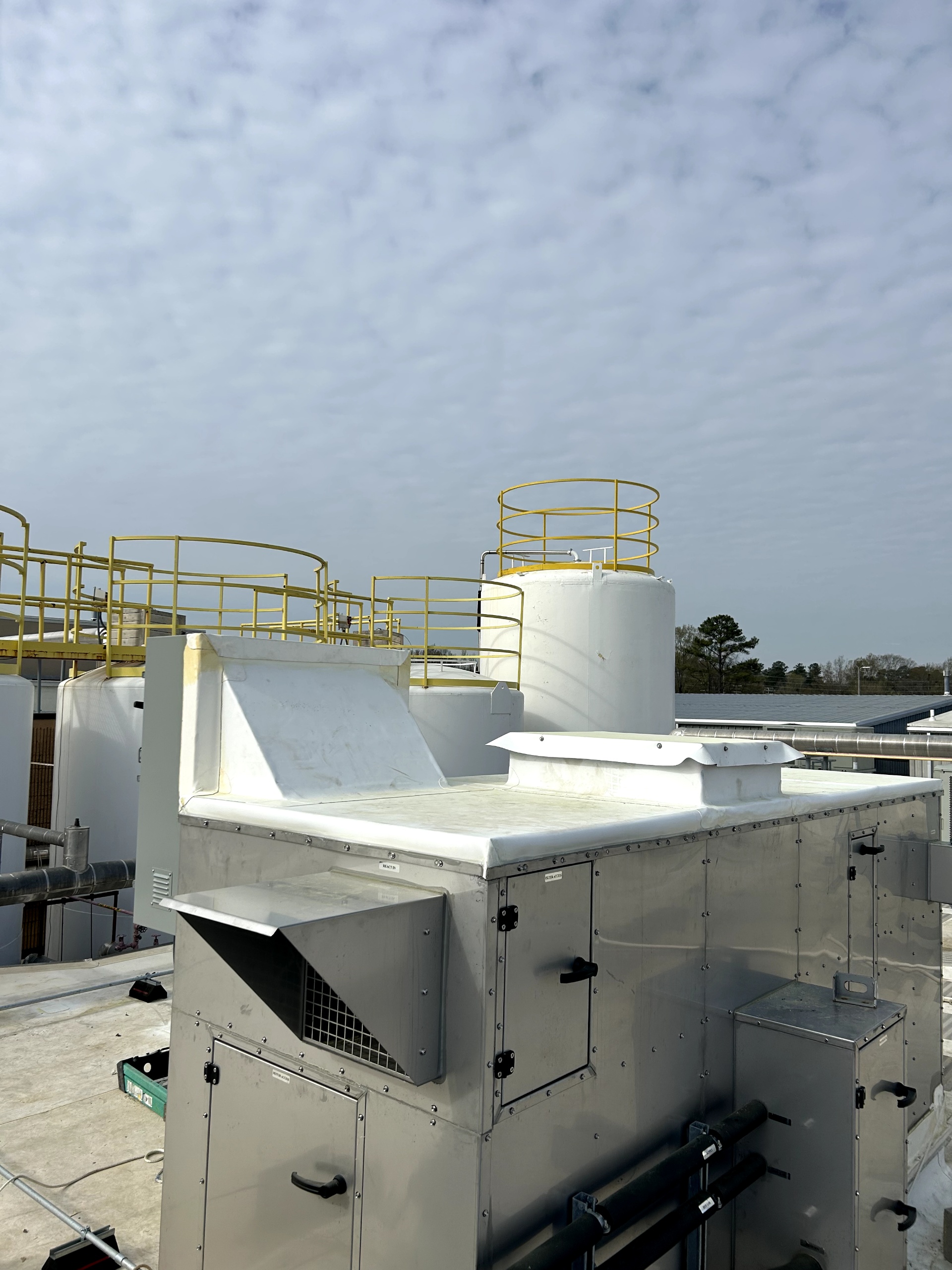
Desiccant dehumidifiers use moisture-absorbing materials such as silica gel or activated alumina to remove water vapor directly from the air.
These systems are ideal for applications requiring precise humidity control, including:
- Pharmaceutical manufacturing
- Food processing facilities
- Chemical laboratories
- Cold storage applications
Desiccant systems perform well in lower-temperature environments where refrigerant systems may become less effective.
How Industrial Dehumidifiers Protect Equipment
One of the biggest advantages of industrial dehumidification is equipment protection.
High humidity levels allow condensation to form on machinery, electrical systems, and metal surfaces. Over time, this moisture exposure leads to rust, corrosion, oxidation, and premature wear on critical industrial equipment.
Moisture damage commonly affects:
- Motors and bearings
- Pumps and compressors
- Conveyor systems
- Electrical control panels
- HVAC equipment
- Structural steel components
Corrosion can weaken machinery performance, increase repair costs, and eventually lead to complete equipment failure.
In offshore and marine applications, humidity control becomes even more important because salt air dramatically accelerates corrosion. Industrial dehumidifiers help remove moisture before condensation can develop, reducing corrosion risks and helping facilities extend equipment lifespan.
By maintaining proper humidity levels, businesses can improve equipment reliability, reduce maintenance requirements, and minimize costly downtime.
Protecting Warehouse Inventory from Moisture Damage
Humidity can also create major problems for stored products and inventory.
Many materials are highly sensitive to moisture exposure, including electronics, paper products, pharmaceuticals, textiles, chemicals, and packaged goods. Excess humidity can cause products to warp, spoil, swell, deteriorate, or become contaminated before they ever reach the customer.
In warehouses and distribution centers, fluctuating temperatures often create condensation on inventory and packaging materials. Cardboard boxes may weaken, labels may peel off, and moisture-sensitive products can lose quality during long-term storage.
For manufacturers and warehouse operators, inventory damage can result in:
- Lost revenue
- Product waste
- Customer complaints
- Failed inspections
- Increased replacement costs
Industrial dehumidifiers help create controlled storage environments that preserve product quality and protect inventory investments.
Preventing Mold and Mildew in Industrial Facilities
Mold and mildew thrive in humid environments. Once moisture levels remain elevated for extended periods, mold growth can spread quickly throughout a facility.
Mold problems commonly affect:
- Walls and ceilings
- Production areas
- Storage rooms
- Building insulation
In addition to damaging materials and inventory, mold can negatively impact indoor air quality and employee health.
Commercial dehumidifiers help reduce airborne moisture levels that allow mold to grow. This is especially important in food processing facilities, pharmaceutical operations, warehouses, and manufacturing plants where cleanliness and environmental control are critical.
By proactively managing humidity, facilities can avoid costly mold remediation projects and maintain healthier working conditions.
Improving Energy Efficiency and Operational Performance
Industrial humidity control also improves overall facility performance.
When moisture levels become too high, HVAC systems must work harder to maintain comfortable indoor conditions. Excess humidity can also contribute to equipment overheating, sensor malfunctions, production inconsistencies, and longer drying times in manufacturing processes.
Maintaining proper humidity levels helps create a more stable operating environment where equipment performs more efficiently and reliably.
Facilities that invest in industrial dehumidification often benefit from:
- Reduced HVAC strain
- Lower maintenance costs
- Improved equipment performance
- Fewer operational disruptions
- Increased energy efficiency
Over time, these improvements can significantly reduce operating expenses while increasing productivity.
Industrial Dehumidifiers for Regulatory Compliance
Many industries must maintain strict humidity and climate control standards to comply with regulations and quality assurance requirements.
Industries that rely heavily on humidity control include:
- Pharmaceutical manufacturing
- Food and beverage processing
- Electronics manufacturing
- Healthcare facilities
- Chemical processing plants
Improper humidity levels can compromise product quality, create contamination risks, and lead to failed inspections or compliance violations.
Industrial dehumidification systems help facilities maintain stable and measurable environmental conditions that support regulatory compliance and product consistency.
Specialized Dehumidification Solutions for Hazardous Environments
Certain industrial applications require advanced dehumidification systems designed for hazardous environments.
Eldridge works with Innovative Air Technologies to provide explosion-proof dehumidification systems for offshore rigs and other high-risk industrial operations.
These specialized systems are engineered to provide safe and reliable moisture control while meeting the demands of hazardous operating conditions.
For industries operating in challenging environments, industrial dehumidifiers play a critical role in both safety and operational reliability.
Choosing the Right Industrial Dehumidifier
Every facility has unique humidity control needs, which is why choosing the right industrial dehumidifier is important.
Factors that influence dehumidifier selection include:
- Facility size
- Relative humidity levels
- Temperature conditions
- Industry requirements
- Ventilation systems
- Environmental risks
Refrigerant dehumidifiers are often ideal for warm, high-humidity spaces, while desiccant systems are better suited for colder environments or facilities requiring precise humidity control.
Working with experienced industrial ventilation and climate control specialists helps ensure facilities choose the best solution for their application.
Overcoming Humidity Challenges
Excess humidity can quietly create serious operational challenges inside industrial and commercial facilities. From equipment corrosion and mold growth to damaged inventory and rising maintenance costs, uncontrolled moisture often leads to expensive consequences.
Industrial dehumidifiers provide a proactive solution by maintaining proper humidity levels and protecting critical assets throughout the facility. Whether used in warehouses, manufacturing plants, marine applications, or food processing facilities, commercial dehumidification systems help businesses improve efficiency, reduce downtime, and extend equipment lifespan.
Eldridge provides industrial dehumidifier solutions designed to help facilities maintain climate control, protect inventory, and preserve long-term operational performance.