
What’s lurking in the air of your industrial facility? It might be more dangerous than you think. From woodworking shops to food processing plants, finely divided particles – combustible dust – present an insidious risk of flash fires and explosions. The question isn’t if the hazard exists, but how effectively you’re safeguarding against it. Combustible dust refers to fine particles of a solid material that can ignite and explode when suspended in the air in sufficient concentration and exposed to an ignition source. Although it may seem like something not seen as critical, it is highly dangerous for an industrial operation to have combustible dust. In this blog, we will explore why industrial ventilation is not just a good practice but an indispensable safety measure for mitigating combustible dust risks.
Understanding Combustible Dust: What It Is and Why It’s Dangerous
In order to tackle the problem at hand we must understand what combustible dust is. There are several characteristics of combustible dust such as any finely divided solid material that presents a fire or explosion hazard when suspended in air or another oxidizing medium over a range of concentrations. Some examples of combustible dust include wood dust, metal dust, grain dust, sugar, plastics, pharmaceuticals, coal, textiles. There is also a “Dust Pentagon” which essentially expands on the traditional “fire triangle” by adding two additional elements that are necessary for a dust explosion to occur. The Dust Pentagon includes:
- Fuel (combustible dust)
- Oxidizer (air/oxygen)
- Ignition Source (spark, hot surface, static electricity)
- Dispersion (dust cloud)
- Confinement (enclosed space)
Several industries such as woodworking, food processing, pharmaceuticals, metalworking, plastics manufacturing, and agriculture are all at risk of having combustible dust. Furthermore, there are two different types of explosion mechanisms.
- Primary: Initial explosion in a confined space
- Secondary: Dust dislodged by the primary blast, creating a much larger, more devastating explosion.
Combustible dust is a dangerous culprit to many industries and should be controlled to avoid further dangers.
The Perils of Inadequate Dust Control
There are several different dangers and risks behind having combustible dust around an industrial facility. Some of these dangers include
- Flash Fires: A flash fire is when the fine dust particles can ignite easily from various sources like hot surfaces, electrical sparks, friction, or open flames. The large surface area of dust particles allows for very rapid combustion.
- Explosions: Referring back to the “dust pentagon” and the primary and secondary explosions, there is a high risk of an explosion in an industrial setting.
Health Hazards
Although explosions are the main danger, combustible dust poses a threat to workers’ health.
-
- Respiratory Irritation: Dust particles can irritate the respiratory tract, leading to coughing, sneezing, and shortness of breath.
- Chronic Respiratory Diseases: Long-term exposure can contribute to conditions like asthma, bronchitis, and other occupational lung diseases.
- Allergic Reactions: Some dusts can trigger allergic reactions in sensitive individuals.
- Systemic Toxicity: Depending on the material, inhaled dust can enter the bloodstream and affect other organs
- Cancer Risk: Certain types of dust, especially those containing carcinogenic substances (e.g., some metal dusts, wood dust), can increase the risk of cancer over time.
- Skin and Eye Irritation: Direct contact with dust can cause irritation.
Property Damage & Business Interruption
In the case of an explosion, there can be severe damage to your building as well as your equipment. Because of the damages that could occur, one should expect extra costs. Some of these costs could include temporary facilities, overtime for employees working on recovery, and expedited shipping for replacement parts or materials.
Legal & Reputational Consequences
-
- Fines and Penalties: Regulatory bodies like OSHA (Occupational Safety and Health Administration) in the US will conduct investigations. Violations of safety standards (e.g., NFPA codes for combustible dust) can lead to substantial fines, which can quickly accumulate.
- Worker Injury/Fatality Lawsuits: Families of deceased workers or injured workers can file lawsuits for negligence, wrongful death, medical expenses, lost wages, and pain and suffering. These can run into millions of dollars per individual.
- Negative Public Perception: A major accident can severely tarnish the company’s brand image, making it difficult to attract new business or retain existing customers. This can also prevent other companies from trusting them and do business with them.
As listed above, there are several negative consequences from not having combustible dust under control. However, there are industrial ventilation solutions for combustible dust to prevent accidents from happening and to protect your workers health.
How Industrial Ventilation Mitigates Combustible Dust Risks
There are risks associated with combustible dust and it is more of the reason to have an effective industrial ventilation system. The most effective way to stop the dust from spreading is to capture it at the source. Diluting the dust concentrations as efficiently as possible below explosive limits is extremely important in an industrial setting. Some of the key functions of an effective industrial ventilation system for controlling combustible dust include
- Capture: Hoods and enclosures designed to draw in dust-laden air. This directed airflow, or capture velocity, pulls the contaminants away from the source of generation. Once captured, the dust is then transported through ductwork to a filtration or collection system, effectively removing it from the air.
- Conveyance: Ductwork to transport the dust to a collection point. Ducts must be sized appropriately to maintain sufficient air velocity to prevent dust settling and accumulation within the ducts. They should also minimize bends and turns.
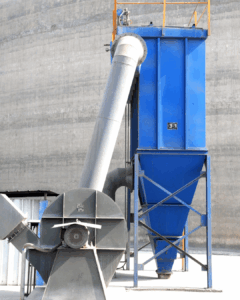
- Filtration/Collection: Dust collectors like baghouses are recommended to remove dust particles from the air. The larger the baghouse the more dust it can collect. Dust collectors should also be designed to have explosion proof equipment.
- Exhaust/Recirculation: Safely exhausting clean air or recirculating it back into the facility. If the filtered air is to be recirculated back into the facility, it must meet specific purity standards (e.g., via HEPA filters) to ensure it doesn’t reintroduce dust or other contaminants into the workspace. NFPA standards provide strict guidelines for recirculation to prevent dust accumulation in the breathing zone and to avoid exceeding health exposure limits.
Proper industrial ventilation design is the heart of dust control and prevents such dangers like explosions and fires from arising in your operations.
Regulatory Compliance and Industry Standards
Besides the design, there are several regulations that an engineer has to follow in order to create an effective solution.
- OSHA (Occupational Safety and Health Administration) has the general duty clause which is to cite employers for failing to protect workers from recognized combustible dust hazards that are causing or are likely to cause death or serious physical harm.
- NFPA (National Fire Protection Association) has consolidated its numerous combustible dust standards into a single, comprehensive document: NFPA 660, Standard for Combustible Dusts and Particulate Solids, effective December 6, 2024. This new standard streamlines guidance for identifying hazards, controlling dust accumulation, preventing ignition, and implementing explosion protection measures across all industries.
It is essential to not avoid the standards and regulations from these associations because it can lead to lawsuits, penalties, fines and much more. The codes and standards are there to not only protect your employees, but your business as well.
Industrial Ventilation Design for Combustible Dust
The threat of combustible dust is a serious and ever-present concern in numerous industrial settings. Effective industrial ventilation design is not merely a compliance checkbox but a fundamental safety imperative. By prioritizing robust ventilation systems, businesses can significantly mitigate the risks of explosions and fires, protect their workforce, preserve assets, and ensure long-term operational resilience. Investing in proper dust control is an investment in safety, sustainability, and peace of mind.