
Quick Answer
Offshore oil rigs need explosion-proof desiccant dehumidifiers because standard dehumidifiers use electrical components that can spark and ignite flammable gases present in hazardous classified areas. Explosion-proof units control condensation-driven corrosion in void spaces, electrical rooms, and equipment enclosures while meeting Class I Division II hazardous-location safety requirements — protecting both personnel and millions of dollars in offshore assets.
The Critical Role of Explosion-Proof Dehumidifiers on Offshore Oil Rigs
Offshore oil and gas operations are among the most demanding industrial environments in the world. Every piece of equipment installed on an offshore production platform or drilling rig must withstand relentless humidity, corrosive salt air, extreme weather, and potentially explosive atmospheres. While ventilation systems, fans, and gas detection equipment often receive the most attention, one critical component frequently works behind the scenes to protect both personnel and infrastructure — the explosion-proof desiccant dehumidifier.
Without proper humidity control, moisture can quickly become one of the most destructive forces on an offshore facility. Condensation leads to corrosion, electrical failures, equipment degradation, and increased maintenance costs. When these moisture issues occur inside hazardous classified areas where flammable gases may be present, conventional dehumidification equipment simply isn’t an option. Instead, operators require explosion-proof dehumidifiers specifically engineered for hazardous offshore environments.
Companies like Eldridge have spent decades designing customized explosion-proof desiccant dehumidification systems for offshore drilling rigs, production platforms, and marine facilities, helping operators maintain safe, reliable, and efficient operations in some of the harshest environments on Earth.
The Offshore Environment Is Constantly Fighting Against Equipment
Unlike land-based industrial facilities, offshore rigs face a unique combination of environmental challenges. The Gulf of Mexico and other offshore regions expose equipment to continuous high humidity, salt-laden air, large temperature swings, heavy rainfall, and ocean spray, all while much of the criti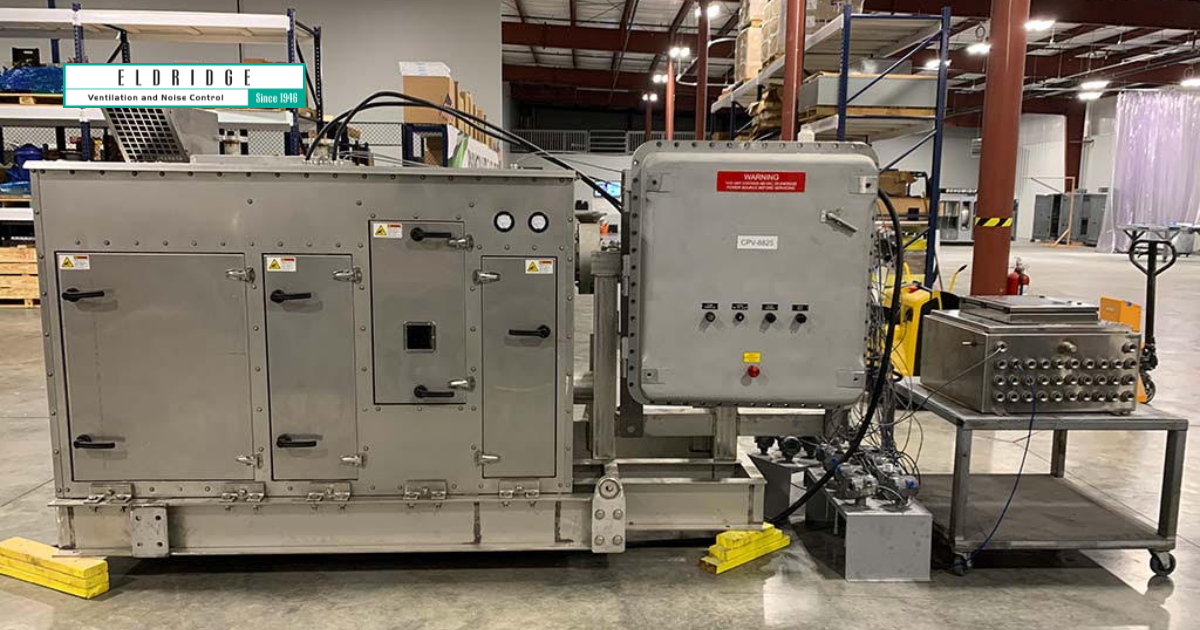 cal infrastructure sits in enclosed voids where hazardous gases may also be present. Any one of these factors would be manageable on its own, but together they create the perfect environment for persistent condensation.
Whenever warm, humid air contacts cooler steel surfaces inside a platform’s hull, void tanks, or equipment rooms, moisture condenses into water droplets. Over time, this seemingly harmless condensation begins attacking structural steel, electrical systems, instrumentation, motors, and sensitive electronics. Left uncontrolled, condensation can eventually result in:
- Structural corrosion
- Electrical shorts
- Premature equipment failure
- Damaged insulation
- Increased maintenance costs
- Safety hazards
- Extended downtime
Humidity control isn’t simply about improving comfort — it directly protects millions of dollars in offshore assets.
Why Standard Dehumidifiers Cannot Be Used Offshore
Many offshore spaces are classified as hazardous locations because flammable gases or vapors may be present during normal or abnormal operating conditions. In these areas, conventional electrical equipment can become an ignition source in several ways: arcing at electrical connections, hot motor surfaces, sparking switch contacts, exposed control panel components, or internal electrical faults can all provide enough energy to ignite a combustible atmosphere. A standard commercial dehumidifier, built for an office or a warehouse, was never designed to operate safely under those conditions.
Instead, offshore facilities require explosion-proof equipment that prevents sparks or excessive surface temperatures from reaching combustible gases. Building an explosion-proof desiccant dehumidifier is significantly more complex than manufacturing a conventional industrial unit. Every electrical component — from motors and controls to sensors and wiring — must satisfy strict hazardous-area requirements while maintaining reliable long-term performance in corrosive marine conditions.
How Explosion-Proof Desiccant Dehumidifiers Work
Unlike refrigerant-based systems that remove moisture by cooling the air below its dew point, desiccant dehumidifiers utilize a moisture-absorbing wheel typically constructed with silica gel or another hygroscopic material. The process is straightforward:
- Humid process air enters the unit.
- Moisture is absorbed by the rotating desiccant wheel.
- Dry air is delivered into the protected space.
- A regeneration section removes moisture from the desiccant media using heated air.
- The cycle repeats continuously.
Because desiccant technology remains highly effective regardless of temperature, it is particularly well suited for offshore applications where humidity control must remain consistent throughout changing weather conditions. Maintaining low relative humidity prevents condensation before it can ever form.
Desiccant vs. Refrigerant Dehumidifiers Offshore
| Factor | Desiccant (Explosion-Proof) | Refrigerant-Based |
|---|---|---|
| Moisture removal method | Absorbs moisture with a rotating hygroscopic wheel | Cools air below dew point to condense moisture |
| Performance in cold/variable temps | Stays effective across changing weather | Efficiency drops as temperatures fall |
| Hazardous area suitability | Available in explosion-proof, Class I Div II configurations | Rarely rated for hazardous classified areas |
| Best offshore use case | Void spaces, electrical rooms, stacked rigs, hazardous zones | Non-classified, climate-controlled interior spaces |
| Maintenance profile | Regeneration heater and wheel servicing | Refrigerant, compressor, and coil servicing |
Preventing Corrosion Below Deck
One of the most challenging locations aboard an offshore platform is inside the hull’s void spaces. These enclosed compartments experience continuous temperature fluctuations that encourage condensation on steel surfaces. Since these spaces are difficult to inspect regularly, corrosion can progress unnoticed for years.
Eldridge recently designed an explosion-proof desiccant dehumidification system for a major offshore production platform where maintaining a specific dew point inside multiple void tanks was critical for preventing structural corrosion. The custom system monitored humidity remotely using sensors installed throughout the platform while maintaining the required environmental conditions inside each protected space. If humidity exceeded acceptable limits, alarms immediately notified operators before condensation could occur.
Protecting Critical Offshore Equipment
Offshore production platforms depend on thousands of electrical and mechanical components operating continuously, and humidity threatens nearly all of them. Electrical control panels, variable frequency drives, and instrumentation are especially vulnerable to moisture intrusion, while motors, pumps, and valves suffer accelerated wear when condensation reaches bearings and seals. Moisture entering these systems accelerates corrosion, damages insulation, and reduces overall reliability.
By maintaining consistently low humidity levels, explosion-proof dehumidifiers significantly extend equipment life while reducing unexpected failures. For offshore operators, improved reliability translates directly into reduced maintenance costs and greater production uptime.
Meeting Strict Offshore Safety Standards
Explosion-proof dehumidifiers must satisfy far more than basic moisture removal requirements. Offshore operators often require equipment that complies with Class I Division II hazardous location requirements while simultaneously meeting additional company-specific electrical standards. Meeting those standards typically means specifying explosion-proof motors, hazardous-duty electrical enclosures, marine-grade coatings, and corrosion-resistant construction from the outset of the design.
Beyond the core hazardous-area compliance, most offshore projects also call for remote monitoring capability, PLC integration, HMI operator interfaces, alarm systems, and customized control sequences so the dehumidification system communicates directly with the platform’s broader control network. These features ensure both safe operation and seamless integration into the facility’s overall operations.
Overcoming Offshore Installation Challenges
Installing a dehumidification system offshore is rarely straightforward. Production platforms contain numerous confined spaces connected through long duct runs that create substantial airflow resistance, and there’s often little room to reroute ductwork around existing structural elements.
In one Gulf of Mexico production platform project, Eldridge engineers designed a marine-grade desiccant dehumidification system capable of serving multiple void spaces located throughout the massive offshore structure. To overcome static pressure created by long duct runs, centrifugal booster fans were strategically incorporated into the system. These fans not only maintained airflow but also functioned as volume control devices, ensuring every protected area received the precise amount of conditioned air required to maintain target humidity levels.
Extending the Life of Offshore Assets
Corrosion remains one of the largest long-term maintenance expenses for offshore operators. Replacing structural steel, electrical systems, instrumentation, or damaged equipment is dramatically more expensive than preventing corrosion in the first place. For facilities expected to operate for decades, proactive humidity control adds up to substantial lifecycle savings over reactive repair.
Supporting Offshore Rig Preservation
Explosion-proof dehumidification is equally valuable when offshore drilling rigs are temporarily removed from service. During industry downturns, many mobile offshore drilling units (MODUs) enter “stacked” status to reduce operating expenses. Without humidity control, idle rigs rapidly deteriorate — condensation damages rotating equipment, electrical systems, crew accommodations, and structural components, significantly increasing the cost and time required to return the rig to service.
Eldridge developed specialized dehumidification systems specifically for stacked offshore rigs, preserving valuable assets throughout extended lay-up periods. The effectiveness of this preservation approach became so well established that it influenced offshore rig lay-up guidelines used throughout the industry.
Why Custom Engineering Matters
Every offshore platform presents unique operating conditions, and a standardized solution rarely delivers optimal performance. Platform size, hazardous area classifications, airflow requirements, and ambient conditions shape how a system needs to be sized, while practical realities like duct routing, available utilities, and certification requirements shape how it gets installed. Experienced ventilation engineers perform heat load calculations, psychrometric analysis, and airflow modeling before specifying a custom system capable of meeting the facility’s exact requirements.
Frequently Asked Questions
Do all areas of an offshore rig require explosion-proof dehumidifiers? No. Only spaces classified as hazardous locations — where flammable gases or vapors may be present during normal or abnormal operations — require explosion-proof equipment. Non-classified interior spaces, such as living quarters or general office areas, can typically use standard commercial dehumidification equipment.
What hazardous area classification do offshore dehumidifiers typically need to meet? Most offshore dehumidifiers are specified to meet Class I Division II hazardous location requirements, often alongside additional operator-specific electrical standards. The exact classification depends on the platform’s hazard assessment and the space the unit will serve.
Why not just use a refrigerant-based dehumidifier offshore? Refrigerant units cool air below its dew point to condense moisture out, which makes them less effective as temperatures drop and rarely available in explosion-proof configurations. Desiccant systems stay effective across a wider temperature range and can be built to hazardous-location standards, which is why they’re the standard choice offshore.
Can dehumidification really extend the life of a stacked or idle rig? Yes. Idle rigs deteriorate quickly without humidity control, as condensation attacks rotating equipment, electrical systems, and structural components during lay-up. Controlled humidity preserves the asset and shortens the time needed to bring the rig back into service.
How is an explosion-proof dehumidifier sized for a specific platform? Engineers base sizing on heat load calculations, psychrometric analysis, and airflow modeling tied to the platform’s size, hazardous area classifications, and duct routing, ensuring the system delivers the correct volume of dry air to every protected space.
The Bottom Line
Humidity may be invisible, but its effects on an offshore oil rig are anything but. Uncontrolled moisture accelerates corrosion, shortens equipment life, compromises structural integrity, and increases the risk of costly downtime. In hazardous offshore environments, protecting critical infrastructure requires more than a conventional dehumidifier — it demands a purpose-built explosion-proof desiccant system engineered to operate safely where flammable gases may be present.
Why Work With Eldridge
By combining hazardous-location compliance, advanced humidity control, and custom engineering, explosion-proof dehumidifiers play a vital role in extending equipment life, preserving offshore assets, and ensuring safe operations. With decades of experience designing ventilation and dehumidification systems for offshore drilling rigs, production platforms, and marine facilities, Eldridge continues to deliver solutions that help operators protect their people, equipment, and investments — even in the world’s most challenging operating environments.
Explore Eldridge’s explosion-proof dehumidifier equipment, learn more about our work in marine and offshore markets, or browse solutions for critical environments and general industrial ventilation. For platform-specific engineering, request a quote and our team will help you specify the right system for your operating conditions.