
Industrial facilities face constant challenges when it comes to ventilation. Warehouses, manufacturing plants, agricultural buildings, and large workshops generate heat, trap stale air, and accumulate moisture, fumes, and airborne particles. Traditional electric ventilation systems can address these issues, but they often come with high operating costs, complex installation requirements, and ongoing maintenance concerns. As industries look for more efficient and sustainable solutions, solar-powered industrial fans are emerging as a smart and forward-thinking alternative.
By combining industrial-grade ventilation with renewable solar energy, these systems provide reliable airflow without relying on grid electricity. Products such as the SolAir Industrial Solar Fan from Eldridge USA demonstrate how solar ventilation can deliver measurable cost savings, improved working conditions, and long-term environmental benefits — all while maintaining the durability and performance required in demanding industrial environments.
Eliminating Energy Costs and Protecting Against Rising Utility Prices
One of the most significant advantages of solar-powered industrial fans is their ability to operate without consuming electricity from the grid. Instead of drawing power from utility lines, these fans use photovoltaic panels to convert sunlight directly into energy. As a result, their operating cost is essentially zero once installed.
In industrial facilities where ventilation systems may run for many hours per day — or even continuously — electricity costs can add up quickly. Large fans consume substantial power, especially during warmer months when ventilation demand is highest. Solar-powered fans eliminate this recurring expense entirely, allowing businesses to stabilize operational budgets and reduce exposure to rising energy prices. Over time, these savings can be substantial, especially in regions with high utility rates or long cooling seasons.
Reduced Installation Complexity and Lower Upfront Costs
Beyond energy savings, solar-powered industrial fans also offer advantages during installation. Traditional electric fans often require extensive electrical work, including conduit runs, panel upgrades, and coordination with licensed electricians. In some cases, the cost of 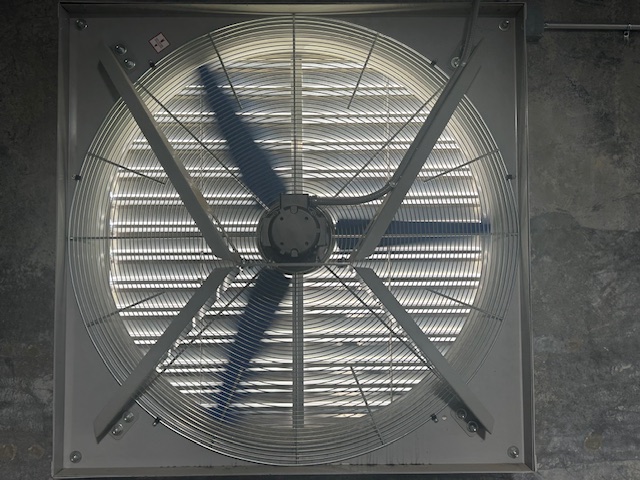 bringing adequate power to the installation location can exceed the cost of the fan itself.
Solar-powered systems are typically designed as integrated packages that include the fan, solar panel, controller, and mounting hardware. Because they operate independently from the grid, they can often be installed with minimal electrical infrastructure. This reduces labor costs, shortens installation timelines, and simplifies planning — especially in older buildings or facilities where electrical capacity is already strained.
The ease of installation also makes solar fans an appealing option for retrofits, expansions, or temporary structures where running new electrical lines would be impractical or expensive.
Clean, Renewable Energy That Supports Sustainability Goals
Sustainability has become a strategic priority for many industrial organizations. Customers, investors, and regulators increasingly expect companies to reduce emissions and demonstrate environmental responsibility. Solar-powered industrial fans contribute directly to these goals by operating on clean, renewable energy and producing zero emissions during use.
Every hour a solar fan runs represents electricity that does not need to be generated from fossil fuels. Over the lifespan of the system, this can significantly reduce a facility’s carbon footprint. For companies tracking energy usage or pursuing ESG initiatives, solar ventilation provides a clear and measurable improvement in environmental performance.
In addition to reducing emissions, visible investments in solar technology can enhance a company’s public image. Solar-powered fans installed on rooftops or exterior walls serve as a tangible signal of a business’s commitment to innovation and sustainability.
Reliable Ventilation for Remote and Off-Grid Locations
Not all industrial facilities have easy access to reliable electrical power. Agricultural buildings, mining operations, remote warehouses, and off-grid work sites often struggle to maintain adequate ventilation because extending power infrastructure is costly or logistically challenging. Solar-powered industrial fans are particularly well suited for these environments.
Because they operate independently of the electrical grid, solar fans can be deployed virtually anywhere sunlight is available. This makes them ideal for remote locations where ventilation is essential for worker safety, equipment longevity, or product quality. Even in grid-connected facilities, solar fans provide added resilience by continuing to operate during power outages, helping maintain airflow and temperature control when conventional systems shut down.
Improved Air Quality, Temperature Control, and Worker Comfort
Effective ventilation is critical for maintaining healthy industrial work environments. Heat buildup, stagnant air, and trapped moisture can create uncomfortable and even hazardous conditions for employees. In facilities that house machinery, chemicals, or manufacturing processes, poor ventilation can also lead to the accumulation of fumes, dust, and airborne contaminants.
Solar-powered industrial fans help address these challenges by continuously removing hot, stale air and promoting fresh air exchange. By reducing indoor temperatures and humidity levels, they help prevent heat stress and create more comfortable working conditions. Improved airflow also helps dilute pollutants and odors, contributing to better indoor air quality.
These improvements have a direct impact on workforce well-being. Employees working in cooler, better-ventilated spaces are generally more productive, experience less fatigue, and face lower health risks. Over time, this can lead to improved morale, reduced absenteeism, and better overall operational performance.
Low Maintenance, Quiet Operation, and Long-Term Reliability
Industrial environments demand equipment that is durable, reliable, and easy to maintain. Solar-powered industrial fans are designed with these requirements in mind. Because they rely on solar energy rather than complex electrical systems, they often have fewer components that can fail. This simplicity translates into lower maintenance needs and reduced downtime.
Many solar fans are constructed with corrosion-resistant materials and industrial-grade finishes, allowing them to withstand harsh conditions such as dust, moisture, and temperature extremes. In addition, solar-powered fans tend to operate more quietly than high-powered electric fans, an important consideration in facilities where noise control matters.
The combination of durability, quiet operation, and minimal maintenance makes solar fans well suited for long-term use in demanding industrial settings.
Flexible Design and Adaptability Across Applications
Solar-powered industrial fans are highly adaptable and can be configured to meet a wide range of ventilation needs. Depending on the design and installation, they can function as exhaust fans to remove hot air or as supply fans to introduce fresh airflow. Flexible mounting options allow them to be installed on walls, roofs, or other structural surfaces.
Many systems also offer optional battery backups, enabling continued operation during cloudy conditions or after sunset. This added flexibility allows facilities to tailor ventilation performance based on specific operational requirements, climate conditions, and building layouts.
Because of this versatility, solar-powered fans can be used in warehouses, manufacturing plants, agricultural facilities, workshops, and storage buildings — making them a practical solution across many industries.
Enhancing Overall Energy Efficiency and Reducing Cooling Loads
Solar-powered industrial fans play an important role in broader energy-efficiency strategies. By removing heat before it accumulates, they help reduce the internal heat load of a building. This can significantly decrease reliance on energy-intensive cooling systems such as air conditioning.
In many facilities, ventilation alone can maintain acceptable indoor temperatures for much of the year. Even when mechanical cooling is required, solar fans can reduce the workload on HVAC systems, extending their lifespan and lowering energy consumption. This integrated approach to ventilation and cooling improves overall building efficiency and contributes to long-term cost savings.
Strong Long-Term Return on Investment
While the initial purchase price of a solar-powered industrial fan may be higher than some traditional electric options, the long-term financial benefits are compelling. With no ongoing electricity costs, minimal maintenance requirements, and durable construction, solar fans often pay for themselves over time.
The return on investment becomes even stronger in facilities with high ventilation demands, long operating hours, or expensive utility rates. As energy costs continue to rise, the value of systems powered by free, renewable sunlight becomes increasingly attractive.
SolAir for Your Industrial Applications
Solar-powered industrial fans represent a modern solution to longstanding ventilation challenges. By eliminating energy costs, simplifying installation, improving air quality, and supporting sustainability goals, they offer a powerful combination of performance and value. Systems like the SolAir Industrial Solar Fan from Eldridge USA show that solar ventilation is not just an environmentally responsible choice — it is a practical, cost-effective investment for industrial facilities looking to improve efficiency, comfort, and long-term resilience. Contact our engineers today for more information.