
In the world of industrial ventilation, the humble fan is a massive workhorse. But for decades, these workhorses had a major flaw: they were binary. They were either “off” or “on” at full tilt. Imagine driving a car where the engine only has two settings—parked or 100 mph. To slow down, you’d have to keep the engine screaming while riding the brakes.
That “brake-riding” is exactly how traditional ventilation systems operate using dampers or louvers. It’s inefficient, loud, and incredibly hard on the equipment.
Enter the Variable Frequency Drives (VFDs). Often called the “brain” of the motor, the VFD has transformed industrial ventilation from a blunt instrument into a precision-tuned system. Here is a deep dive into how these devices work, the physics behind their efficiency, and why they are the gold standard for modern air handling.
The Fundamental Problem: Fixed Speed Motors
To understand the solution, we have to look at the motor. Most industrial fans are powered by AC induction motors. The speed of these motors is determined by two fixed factors:
- The number of magnetic poles in the motor’s stator.
- The frequency of the incoming power supply (typically 60Hz in North America).
Since you can’t easily change the number of poles once a motor is built, the motor naturally wants to spin at a constant speed. In a traditional setup, if you need less airflow, you close a damper (a metal flap). The fan still spins at full speed, fighting against the restriction, wasting massive amounts of energy as heat and vibration.
What are Variable Frequency Drives?
A VFD sits between the power supply and the motor. Instead of letting the motor “drink” directly from the utility grid, the VFD “reprocesses” the electricity to give the motor exactly what it needs to hit a specific RPM.
The conversion process happens in three main stages:
- The Rectifier (AC to DC): The drive first takes the incoming 480V, 60Hz Alternating Current (AC) and converts it into Direct Current (DC) using a bridge rectifier. Think of this as turning a wavy river into a still reservoir.
- The DC Bus (Filtering): The DC power is then filtered and smoothed using capacitors. This “DC Bus” acts as a buffer, ensuring the power is clean and stable before the next step.
- The Inverter (DC to Synthetic AC): This is where the magic happens. Using Insulated Gate Bipolar Transistors (IGBTs), the VFD switches the DC power on and off thousands of times per second. By varying the width and frequency of these pulses—a process called Pulse Width Modulation (PWM)—the drive creates a “synthetic” AC wave.
By adjusting the frequency of this synthetic wave (say, from 60Hz down to 30Hz), the VFD forces the motor to spin at exactly half speed without losing torque.
The Physics of Energy Savings: The Fan Affinity Laws Explained
The reason VFDs are so popular in ventilation isn’t just about control; it’s about the staggering energy savings governed by the Affinity Laws.
In industrial fan applications, the relationship between speed and power is not linear—it’s cubic.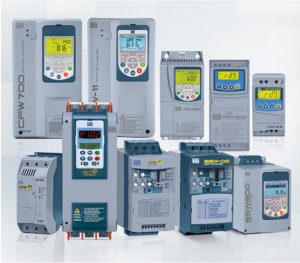
- Flow is proportional to speed: Q1/Q2=N1/N2
- Pressure is proportional to the square of the speed: P1/P2=(N1/N2)2
- Power is proportional to the cube of the speed: HP1/HP2=(N1/N2)3
What does this mean for your bottom line? If you reduce your fan speed by only 20%, you aren’t just saving 20% on your electric bill. Because of the cubic relationship, a 20% reduction in speed can result in nearly a 50% reduction in power consumption. This makes VFDs one of the highest-ROI investments in industrial energy management.
Why VFDs are Important in Industrial Ventilation
1. Precision Static Pressure Control
In many industrial environments, like cleanrooms or chemical processing plants, maintaining a specific “static pressure” is vital to safety. A VFD can be linked to a pressure sensor via a PID loop. If a door opens or a filter becomes clogged, the VFD senses the change and instantly adjusts the fan speed to maintain the exact required pressure, ensuring contaminant containment.
2. “Soft Starting” and Equipment Longevity
When a standard motor starts “across-the-line,” it draws a massive inrush current—often 6 to 10 times its running current. This creates a huge mechanical shock to the belts, bearings, and fan blades. A VFD performs a Soft Start, gradually ramping the motor up to speed. This eliminates the mechanical “jerk,” extending the life of your mechanical drive components by years.
3. Significant Noise Reduction
Industrial fans are inherently loud. However, the noise produced by a fan is largely a function of its tip speed. By using a VFD to run a fan at 80% speed instead of 100% during off-peak hours, the decibel level in the facility drops significantly. This creates a safer, more compliant, and more comfortable environment for workers.
4. Seamless Building Automation Integration
Modern VFDs speak the language of the modern factory. Through communication protocols like Modbus, BACnet, or EtherNet/IP, a VFD can communicate its energy usage, motor temperature, and diagnostic codes directly to a central control room or a Building Management System (BMS).
5. Motor Starter Replacement
All three-phase motors must have a motor starter to provide a controlled inrush of current. However, if you choose to have a VFD, you don’t need a motor starter. While the cost of a VFD is usually twice that of a motor starter, there is some cost efficiency since you don’t need both.
Overcoming Technical Challenges: Harmonics and Reflected Waves
While VFDs are revolutionary, they require proper engineering to avoid side effects. There are two primary technical hurdles:
- Harmonics: Because VFDs switch power on and off rapidly, they can introduce electrical “noise” back into the grid, which can interfere with sensitive electronics. Engineers manage this using line reactors or active harmonic filters.
- Reflected Waves: In applications where the VFD is located far from the motor (long cable runs), voltage spikes can occur at the motor terminals. Using Inverter-Duty rated motors with reinforced insulation is the standard solution to prevent premature motor failure.
Comparing VFDs to Traditional Damper Control
When comparing the two, the differences are stark. Traditional damper control is low-cost upfront but results in high energy waste because the motor always runs at 100%. Mechanical wear is high due to constant heat and vibration.
Conversely, VFD control offers infinite, precise airflow adjustment and extremely high energy efficiency. While the initial investment is higher, the reduced mechanical maintenance and drastic utility savings usually result in a “payback period” of less than two years in most industrial settings.
The Future of Industrial Fans and Variable Frequency Drives
As we move towards the future of industrial fans and ventilation, VFDs are becoming even more intelligent. We are now seeing drives equipped with edge computing and AI that can predict a bearing failure before it happens by analyzing tiny variations in the motor’s current signature. In the quest for “Net Zero” industrial facilities, the VFD is no longer an optional luxury—it is the foundational component of any sustainable ventilation strategy.
By shifting the focus from “restricting flow” to “controlling power,” industrial facilities can breathe easier, knowing they are saving money, reducing their carbon footprint, and protecting their machinery simultaneously. Contact Eldridge today to find out how we can revolutionize the future of industrial ventilation with variable frequency drives.