
Air pressure may seem like an invisible and easily overlooked factor, but in the pharmaceutical industry, it is one of the most critical elements. Air pressure can affect product quality, patient safety, and regulatory compliance. From sterile manufacturing environments to tablet coating and packaging, precise control of it plays a vital role in preventing contamination, ensuring consistency, and maintaining the integrity of medicines. In an industry where even microscopic deviations can have serious consequences, air pressure is far more than a background variable—it is a fundamental control mechanism.
The High-Stakes Nature of Pharmaceutical Manufacturing
Pharmaceutical products are designed to interact directly with the human body. As a result, they must be manufactured under extremely controlled conditions. Any contamination—whether microbial, chemical, or particulate—can compromise a drug’s safety and efficacy. Regulatory bodies such as the FDA, EMA, and WHO enforce strict Good Manufacturing Practice (GMP) guidelines to minimize these risks.
Air is one of the most common vectors for contamination. It can carry dust, microorganisms, vapors, and cross-contaminants from one area to another. Controlling air pressure is one of the most effective ways to manage how air moves within pharmaceutical facilities, making it a cornerstone of cleanroom design and environmental control strategies.
Understanding Air Pressure in Controlled Environments
Air pressure refers to the force exerted by air molecules within a space. In pharmaceutical facilities, pressure differentials are intentionally created between rooms or zones to control airflow direction. Air naturally moves from areas of higher pressure to areas of lower. By manipulating this principle, manufacturers can ensure that air flows in a controlled and predictable manner.
There are two primary pressure strategies used in pharmaceutical environments:
- Positive pressure, where a room has higher pressure than the surrounding areas, causing air to flow outward.
- Negative pressure, where a room has lower pressure than the surrounding areas, causing air to flow inward.
Both strategies are essential, depending on the type of product being manufactured and the risks involved.
Preventing Contamination with Positive Pressure
Positive pressure environments are commonly used in sterile and aseptic manufacturing areas, such as those used for injectable drugs, biologics, and vaccines. In these spaces, the primary goal is to protect the product from external contamination.
By maintaining higher air pressure inside the cleanroom than in adjacent spaces, air flows outward whenever doors are opened or small gaps are present. This outward airflow prevents unfiltered or potentially contaminated air from entering the clean area. Combined with high-efficiency particulate air (HEPA) filtration, positive pressure helps maintain extremely low levels of airborne particles and microorganisms.
Without carefully controlled positive pressure, even the most advanced filtration systems would be less effective, as contaminated air could still infiltrate critical production zones.
Containment and Safety Through Negative Pressure
While positive pressure protects products, negative pressure protects people and the environment. It is used in areas where hazardous materials are handled, such as potent active pharmaceutical ingredients (APIs), cytotoxic drugs, or live biological agents.
In negative-pressure rooms, air is drawn inward and then filtered before being exhausted. This ensures that harmful substances do not escape into surrounding areas, safeguarding workers and preventing cross-contamination with other products. Negative pressure is particularly important in facilities producing multiple drugs, where cross-contamination could lead to serious safety and regulatory issues.
Balancing positive and negative pressure zones within the same facility requires careful engineering and continuous monitoring, as improper pressure relationships can quickly undermine containment strategies.
Ensuring Product Consistency and Quality
Beyond contamination control, air pressure also affects the consistency and quality of pharmaceutical products. Many manufacturing processes are sensitive to environmental conditions, including airflow and pressure stability.
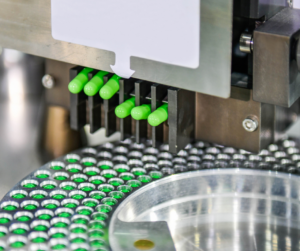
For example, during tablet compression, coating, or capsule filling, fluctuations in air pressure can influence powder behavior, particle distribution, and material flow. Inconsistent airflow may lead to variations in tablet weight, coating thickness, or dose uniformity. Over time, these variations can result in batch failures, product recalls, or regulatory non-compliance.
Stable air pressure helps maintain predictable process conditions, supporting consistent product quality and reducing costly deviations.
The Role of Air Pressure in Cleanroom Classification
Pharmaceutical cleanrooms are classified based on the number of allowable airborne particles per cubic meter, as defined by standards such as ISO 14644. Maintaining these classifications depends not only on filtration but also on pressure control.
Pressure differentials help create cleanroom “cascades,” where the cleanest areas have the highest pressure and progressively less clean areas have lower pressure. This cascading effect ensures that air always flows from cleaner zones to less clean ones, minimizing the risk of particle migration.
If pressure differentials fall outside specified limits, cleanroom classifications can be compromised, potentially halting production until conditions are restored and revalidated.
Regulatory Compliance and Validation
Regulatory agencies expect pharmaceutical manufacturers to demonstrate robust control over their environmental conditions, including air pressure. Pressure differentials are routinely monitored, documented, and audited as part of GMP compliance.
Facilities must validate that their heating, ventilation, and air conditioning (HVAC) systems consistently maintain required pressure relationships under normal and worst-case operating conditions. This includes door openings, equipment operation, and personnel movement.
Failure to maintain or document proper control can result in warning letters, fines, production shutdowns, or loss of manufacturing licenses. As regulatory scrutiny increases, reliable pressure monitoring and alarm systems have become essential components of modern pharmaceutical facilities.
Supporting Automation and Advanced Manufacturing
As the pharmaceutical industry moves toward greater automation, continuous manufacturing, and advanced therapies such as cell and gene treatments, the importance of precise air pressure control continues to grow.
Automated systems rely on stable environmental conditions to function correctly. Pressure imbalances can disrupt robotic operations, isolators, and barrier systems designed to minimize human intervention. In advanced therapy manufacturing, where products are often patient-specific and extremely sensitive, even minor environmental deviations can render a batch unusable.
Air pressure control enables these sophisticated systems to operate safely, efficiently, and reproducibly.
Energy Efficiency and Operational Sustainability
While maintaining controlled air pressure requires energy, modern pharmaceutical facilities are increasingly focused on balancing environmental control with sustainability. Efficient pressure management—using well-designed airflow paths, variable-speed fans, and intelligent control systems—can significantly reduce energy consumption without compromising safety or compliance.
Optimized pressure control minimizes excessive air changes and unnecessary over-pressurization, helping companies meet both regulatory and environmental goals.
Industrial Ventilation Design for Pharmaceutical Manufacturing
Air pressure is a silent but indispensable force in the pharmaceutical industry. It protects products from contamination, safeguards workers, ensures consistent quality, and supports regulatory compliance. From cleanroom cascades to containment of potent compounds, precise control underpins nearly every stage of pharmaceutical manufacturing.
As drug development becomes more complex and regulatory expectations continue to rise, the importance of air pressure will only increase. Investing in robust pressure control systems, continuous monitoring, and thoughtful facility design is not just a technical requirement—it is a commitment to patient safety and product excellence. In an industry where lives depend on precision, even the air itself must be carefully controlled. Contact our team of experts for more information on our design services.