
Emergency Ventilation for Ammonia Refrigeration Systems
Ammonia refrigeration plays an essential role in many food processing, cold storage, manufacturing, and industrial facilities.
Its efficiency makes it well suited for large-scale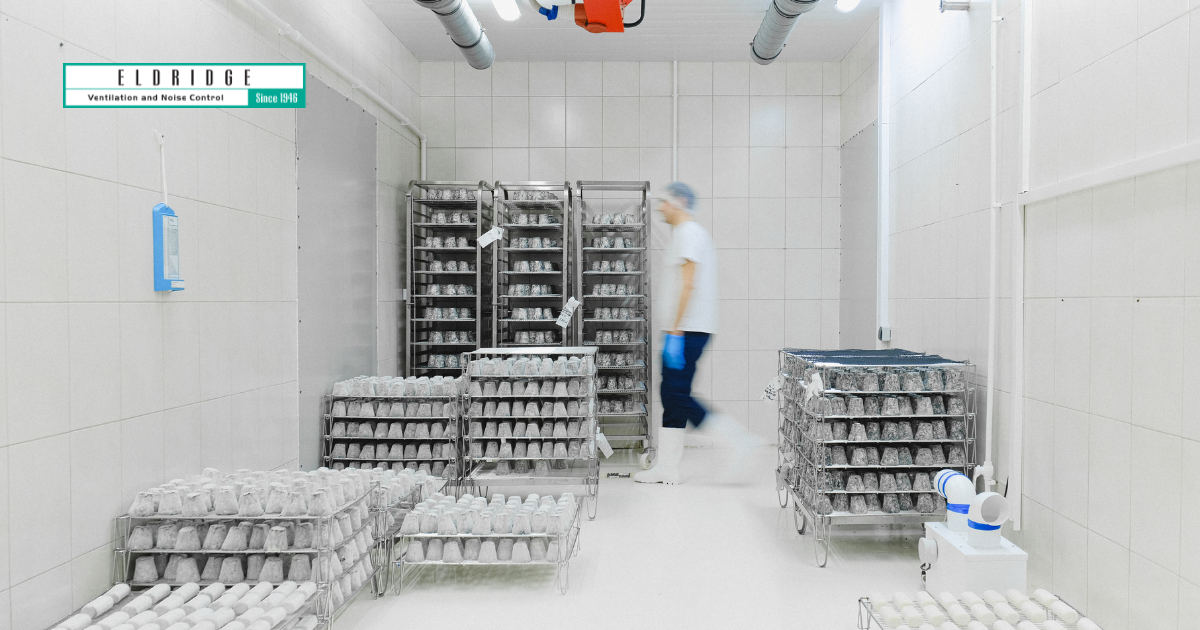 refrigeration, but an ammonia release can also create a serious hazard for employees and facility operations.
For facilities that rely on ammonia refrigeration, emergency ventilation is an important part of preparing for a potential release. A properly designed system can help dilute and exhaust ammonia from affected areas and support a facility’s emergency response plan.
Why Is Ammonia Dangerous?
Anhydrous ammonia is a colorless gas with a strong, recognizable odor. Exposure can irritate or damage the eyes, skin, and respiratory system, while higher concentrations can quickly create dangerous conditions.
Ammonia can also present a fire or explosion hazard at sufficiently high concentrations. When mixed with air, ammonia can form a flammable or explosive mixture within a specific concentration range. This means an emergency ventilation system may need to address both the potential health hazards associated with exposure and the risks associated with high concentrations of ammonia.
In enclosed spaces such as refrigeration machinery rooms, a release can require employees to evacuate the affected area. Food processing and cold storage facilities also face the potential for operational disruptions and other consequences when refrigeration equipment or surrounding areas are affected.
Facilities using ammonia refrigeration therefore need multiple layers of protection, including leak detection, emergency procedures, employee training, and properly designed emergency ventilation.
Understanding Emergency Ventilation Requirements
Industry standards and mechanical codes establish requirements for ventilation in ammonia refrigeration machinery rooms. ANSI/IIAR 2, along with applicable mechanical and refrigeration codes, provides guidance for the design and operation of these systems.
Emergency ventilation systems may be required to provide 30 air changes per hour (ACH), depending on the applicable code and system design. But air changes are only one consideration when developing an effective emergency ventilation strategy.
One of the first questions to consider is what the emergency ventilation system needs to accomplish.
Depending on the facility and applicable requirements, the priority may be reducing ammonia concentrations below a level that presents a fire or explosion hazard, reducing concentrations to address hazards to personnel, or addressing multiple objectives as part of the facility’s overall emergency response strategy.
Understanding that objective is an important starting point for determining the airflow, equipment, controls, and overall system design appropriate for the application.
Where Will the Ammonia Go?
The behavior of ammonia after a release is another important part of ventilation system design.
Ammonia vapor is lighter than air and generally tends to rise, making the location of exhaust points an important consideration for design. Exhaust openings can be positioned to help capture and remove ammonia as it accumulates within the space.
An engineered ventilation system should consider the characteristics of the space and the expected behavior of airflow during a release.
Emergency Exhaust Is Only Part of the System
When an emergency exhaust fan removes air from a machinery room, replacement air needs a way to enter the space. Without adequate make-up air, excessive negative pressure can develop and affect the performance of the ventilation system.
An effective emergency ventilation system may incorporate:
- Emergency exhaust fans
- Make-up air openings or supply systems
- Louvers and dampers
- Ductwork
- Controls and detection interfaces
- Properly located exhaust discharge points
These components need to work together to establish an effective airflow path through the affected space.
This is particularly important in food processing and cold storage facilities, where refrigeration systems may operate alongside production areas, warehouses, loading areas, occupied spaces, and other critical facility operations.
Is Your Existing Ventilation System Prepared?
Installing the correct equipment is only the beginning. As facilities change, ventilation performance can change with them.
New equipment, facility expansions, modified building openings, or changes to the refrigeration machinery room can alter airflow. Equipment condition can also affect performance over time. Worn fan components, blocked louvers, malfunctioning dampers, and other restrictions may prevent a system from performing as originally designed.
Periodic system evaluations can help facilities identify these issues before an emergency occurs.
Facility teams should routinely verify that emergency exhaust fans operate properly, louvers and dampers function as intended, airflow paths remain unobstructed, and controls and emergency activation systems are working correctly.
An Engineered Approach to Ammonia Ventilation
Emergency ventilation requires more than selecting equipment based on maximum airflow. The entire system needs to be considered.
Eldridge has decades of experience solving complex industrial airflow challenges across food processing, cold storage, manufacturing, and other demanding environments.
Our team can evaluate existing ventilation systems and help facilities determine whether fans, louvers, dampers, make-up air, ductwork, and other components are properly designed for the application. When modifications are necessary, Eldridge can recommend equipment or develop engineered ventilation solutions based on the facility’s specific requirements.
Prepare Before an Emergency
An ammonia release isn’t the time to discover that an emergency fan isn’t performing properly or that a machinery room doesn’t have adequate replacement air.
Facilities that rely on ammonia refrigeration should understand the requirements that apply to their systems and periodically evaluate whether their emergency ventilation equipment is prepared to perform when needed.
Need help evaluating your ammonia emergency ventilation system? Contact Eldridge to discuss your facility, existing equipment, and ventilation requirements.