
 Recognize Humidity Issues Before They Escalate
Cold storage facilities depend on carefully controlled environmental conditions to protect temperature-sensitive products, maintain operational efficiency, and preserve product quality. While temperature control often receives the most attention, humidity is another critical factor that can significantly impact facility performance.
Excess moisture can lead to condensation, frost accumulation, slippery floors, equipment corrosion, and other challenges that interfere with daily operations. Left unaddressed, these issues can increase maintenance requirements, compromise product integrity, and contribute to costly downtime.
Effective humidity management requires more than keeping a facility cold. It requires understanding how moisture enters, accumulates, and moves throughout the building.
Why Humidity Control Matters in Cold Storage
Cold storage facilities face unique challenges because of the significant temperature differences between refrigerated spaces and the surrounding environment.
When warm, humid air enters a cold storage area, it cools rapidly. As the air temperature drops, its ability to hold moisture decreases, causing water vapor to condense on nearby surfaces or freeze when temperatures are sufficiently low.
This is particularly common in facilities with frequent door openings, high product turnover, or loading docks exposed to outdoor conditions.
Without appropriate humidity control, moisture can accumulate in areas where it affects equipment performance, facility safety, and product quality.
These challenges are especially important in food processing plants, refrigerated warehouses, distribution centers, and other facilities that depend on consistent environmental conditions.
Common Problems Caused by Excess Humidity
- Condensation on Walls, Ceilings, and Equipment
Condensation is one of the most visible signs of excessive moisture in a cold storage facility.
Water droplets may develop on ceilings, walls, piping, and equipment when humid air encounters surfaces below its dew point.
Beyond creating maintenance concerns, condensation can introduce moisture into areas where it may affect packaging, stored products, and sanitation conditions.
In food storage and processing environments, uncontrolled condensation can also create conditions that encourage microbial growth.
- Frost and Ice Accumulation
In freezer environments, excess moisture can lead to frost and ice buildup on surfaces, doorways, and refrigeration equipment.
Ice accumulation can restrict access, interfere with door operation, and create hazardous walking conditions.
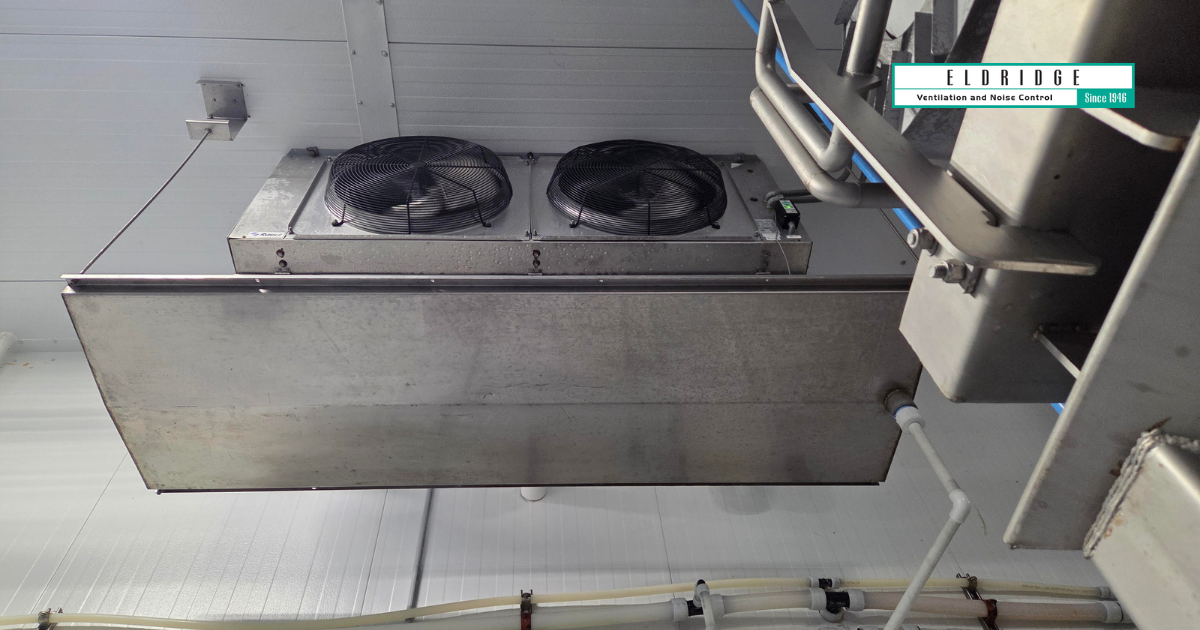
Frost buildup on evaporator coils can also reduce heat transfer efficiency, potentially increasing defrost requirements and placing additional demands on refrigeration equipment.
Although some frost formation is expected in certain applications, excessive or recurring buildup may indicate that moisture infiltration or humidity control needs attention.
- Slippery Floors and Unsafe Working Conditions
Moisture that collects on floors can create slipping hazards, particularly in high-traffic areas where employees and material-handling equipment frequently move between temperature zones.
Condensation near loading docks, refrigerated entryways, and processing areas can make it more difficult to maintain safe working conditions.
In freezer applications, accumulated moisture may freeze, creating additional hazards for employees and equipment operators.
Addressing the source of excess moisture can help reduce recurring floor condensation and ice formation.
- Product Quality and Packaging Concerns
Humidity can affect both stored products and the materials used to package them.
Excess moisture may weaken cardboard packaging, damage labels, and contribute to deterioration in products that are sensitive to environmental conditions.
In food storage environments, condensation can also introduce sanitation and product-handling concerns.
Maintaining appropriate humidity levels helps protect inventory and preserve the conditions required for storage and distribution.
- Equipment Corrosion and Increased Maintenance
Cold storage facilities rely on refrigeration equipment, ventilation components, electrical systems, and other machinery to maintain operations.
Persistent condensation and elevated moisture levels can accelerate corrosion on susceptible metal components and contribute to premature equipment deterioration.
Excessive frost accumulation may also increase refrigeration system maintenance requirements.
Over time, these issues can result in more frequent service interruptions, additional maintenance expenses, and reduced equipment reliability.
How to Identify Humidity Problems in Your Facility
Humidity problems are not always immediately obvious. In some cases, facilities may experience recurring symptoms without recognizing excess moisture as the underlying cause.
Facility managers should watch for several common warning signs:
- Visible condensation: Water droplets forming on ceilings, walls, pipes, doors, or equipment.
- Recurring frost or ice: Excessive buildup around freezer doors, evaporator coils, or other cold surfaces.
- Wet or slippery floors: Persistent moisture near loading docks, doorways, or temperature transition areas.
- Damaged packaging: Softened cardboard, peeling labels, or moisture-related product damage.
- Equipment corrosion: Rust or deterioration on metal surfaces and mechanical components.
- Frequent defrost cycles: Increased frost accumulation or defrost requirements that may indicate excessive moisture entering refrigerated spaces.
While these symptoms may indicate excessive humidity, they do not always point to a single cause.
Identifying where moisture originates and how it moves through the facility is essential to developing an effective, long-term solution.
What Causes Excess Humidity in Cold Storage Facilities?
Several factors can contribute to moisture problems in refrigerated environments.
Frequent Door Openings and Air Infiltration
Loading docks, personnel doors, and other access points can allow warm, humid air to enter refrigerated spaces.
Facilities with frequent forklift traffic or continuous product movement may experience repeated moisture infiltration throughout the day.
Improper Air Pressure
Air pressure imbalances can contribute to unwanted air movement between refrigerated spaces and adjacent areas.
When pressure relationships are not properly managed, humid air may be drawn into temperature-controlled environments through doorways, gaps, and other building openings.
Inadequate Dehumidification
Some facilities rely primarily on refrigeration equipment to manage moisture.
However, refrigeration alone may not provide sufficient humidity control for every application, particularly where moisture loads are high or environmental conditions fluctuate.
Changes in Facility Operations
Increased production, expanded storage, new equipment, or shifting traffic patterns can change a facility’s moisture load.
A facility’s original ventilation and humidity-control systems may no longer be appropriate for its current operating requirements.
Poorly Managed Airflow
Air distribution can influence where moisture accumulates and how effectively it is removed.
Uneven airflow, uncontrolled air movement between temperature zones, and inadequate ventilation design can contribute to persistent condensation problems.
How Can Cold Storage Facilities Improve Humidity Control?
Effective humidity management starts with evaluating the facility’s specific operating conditions.
Because every cold storage environment is different, there is no universal solution for eliminating excess moisture.
Depending on the application, improvements may involve:
- Industrial dehumidification: Removing excess moisture from the air to help maintain appropriate humidity levels.
- Airflow management: Evaluating air movement and distribution to reduce moisture accumulation in problem areas.
- Pressure control: Managing pressure relationships to limit unwanted infiltration of humid air.
- Ventilation system improvements: Addressing equipment limitations or airflow imbalances that contribute to moisture-related issues.
- Moisture infiltration reduction: Evaluating doors, loading docks, and other areas where humid air enters refrigerated spaces.
- System modifications: Updating existing equipment or integrating additional humidity-control solutions as facility requirements change.
Selecting the right approach requires consideration of temperature, humidity, moisture loads, facility layout, and daily operations.
For example, a refrigerated warehouse experiencing condensation near loading docks may require a different approach than a food processing facility dealing with excess moisture generated by production activities.
The objective is not simply to remove more moisture, but to maintain the environmental conditions required for the facility’s products, processes, and equipment.
How Eldridge Helps Facilities Address Humidity Challenges
At Eldridge, we understand that effective humidity control is an important part of overall industrial ventilation and climate control.
With decades of experience providing engineered ventilation solutions, our team works with industrial facilities to evaluate operating conditions, identify airflow challenges, and develop solutions tailored to their specific requirements.
Our capabilities include industrial dehumidification equipment, ventilation systems, airflow management, and custom-engineered solutions for demanding industrial environments.
Rather than approaching humidity as an isolated problem, Eldridge considers how temperature, moisture, ventilation, and air pressure interact throughout the facility.
Whether a project involves improving an existing system, addressing recurring condensation, or planning ventilation and humidity control for a new installation, our team can help identify an appropriate approach. Contact us to start designing your solution today.