
Louvers vs. Dampers: What’s the Difference in Industrial Ventilation?
Louvers and dampers are common components in industrial ventilation systems. Because they often work together, it can be easy to confuse their roles. 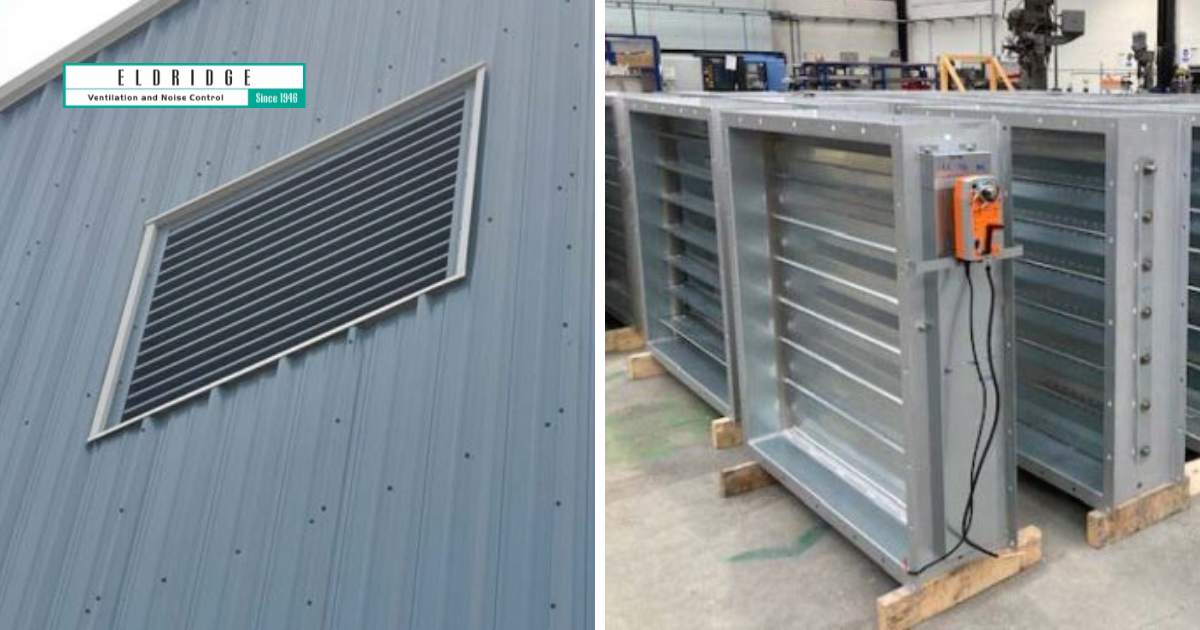
Both affect how air moves into or out of a building, but they serve different purposes. In simple terms, louvers provide a pathway for airflow while helping keep unwanted elements out. Dampers primarily regulate, isolate, or control airflow.
Understanding the difference matters because these components don’t operate independently. Their size, configuration, and placement can affect airflow, pressure drop, fan performance, and overall system performance.
What Is an Industrial Louver?
A louver covers an opening where air needs to enter or leave a building. It also helps protect the opening from exterior conditions.
Louvers typically use a frame with fixed blades. These blades allow airflow while helping limit the intrusion of rain, debris, and other outside elements.
Common applications include outside air intake, exhaust, make-up air, equipment ventilation, and mechanical rooms.
Selecting the right louver involves more than simply matching it to the dimensions of an opening. Airflow requirements, free area, air velocity, pressure drop, weather protection, and operating conditions can all influence the appropriate design.
What Is an Industrial Damper?
While a louver provides a path for airflow, a damper controls that airflow.
Dampers use movable blades that can open, close, or modulate depending on the application. Manual controls, mechanical systems, or larger ventilation control systems can operate these blades.
A backdraft damper is one common example. It opens when air moves in the intended direction and closes when airflow stops or reverses.
Other damper designs serve different purposes. The right choice depends on how the ventilation system needs to operate.
Louvers vs. Dampers: What’s the Key Difference?
The easiest way to remember the distinction is protection versus control.
A louver helps protect a ventilation opening while allowing air to move through it.
A damper controls whether, or how much, air moves through the opening or system.
In many industrial applications, the two work together. For example, an exhaust opening may use both a louver and a backdraft damper.
Each component serves a different purpose. However, both can affect how the overall system performs.
How Can Louvers and Dampers Affect Fan Performance?
Every component in an airflow path creates some degree of resistance.
Fans must overcome resistance from louvers, dampers, filters, ductwork, silencers, and other equipment. If the system doesn’t account for that resistance, actual airflow may differ from what the facility expects.
An improperly sized louver or damper can increase air velocity and pressure drop. It can also reduce airflow and contribute to other performance issues.
This is why selecting a fan based only on its CFM rating isn’t enough. The fan must operate within the conditions created by the entire ventilation system.
Is the Fan Really the Problem?
When a ventilation system doesn’t deliver enough airflow, the fan often gets the blame.
But the fan may only be part of the story.
A restrictive louver, damaged damper, blocked opening, or dirty filter can reduce the amount of air a fan moves. Changes to ductwork or other sources of system resistance can also affect performance.
Declining airflow, unexpected drafts, and changes in building pressure can all signal a larger ventilation problem. Doors that suddenly become difficult to open can provide another clue.
Replacing the fan or increasing its size may not solve the problem if another component creates the restriction.
Design the System, Not Just the Components
Louvers and dampers may appear simple, but proper selection requires an understanding of the entire ventilation system.
There isn’t one louver or damper configuration that’s right for every industrial application.
Eldridge evaluates airflow requirements, system resistance, building pressure, operating conditions, and existing equipment. Our team can then help determine the right combination of fans, louvers, dampers, and other ventilation components.
Whether you’re designing a new system or troubleshooting an existing one, the first step is understanding what’s happening throughout the airflow path.
Not sure whether your louvers, dampers, or other ventilation components are properly sized? Contact Eldridge for an evaluation.