
On-site power generation for data centers is becoming an increasingly important consideration as data center power requirements continue to grow. The rapid expansion of cloud computing, artificial intelligence,and other power-intensive technologies is placing greater demands on electrical infrastructure. For some facilities, relying entirely on utility power can create challenges related to available capacity, reliability, and future expansion.
Generating electricity on-site can provide data centers with another way to meet growing power requirements while improving energy resiliency. Natural gas turbines and other generating technologies can provide substantial power close to where it is needed. However, on-site generation also creates new engineering challenges, particularly when generating equipment is located inside an enclosed building.
Heat, airflow, static pressure, noise, humidity, equipment protection, and outdoor conditions all need to be considered when designing the facility.
For data centers considering on-site generation, the key is not simply producing enough electricity. The entire power-generation environment must be designed to operate reliably.
What Is On-Site Power Generation for Data Centers?
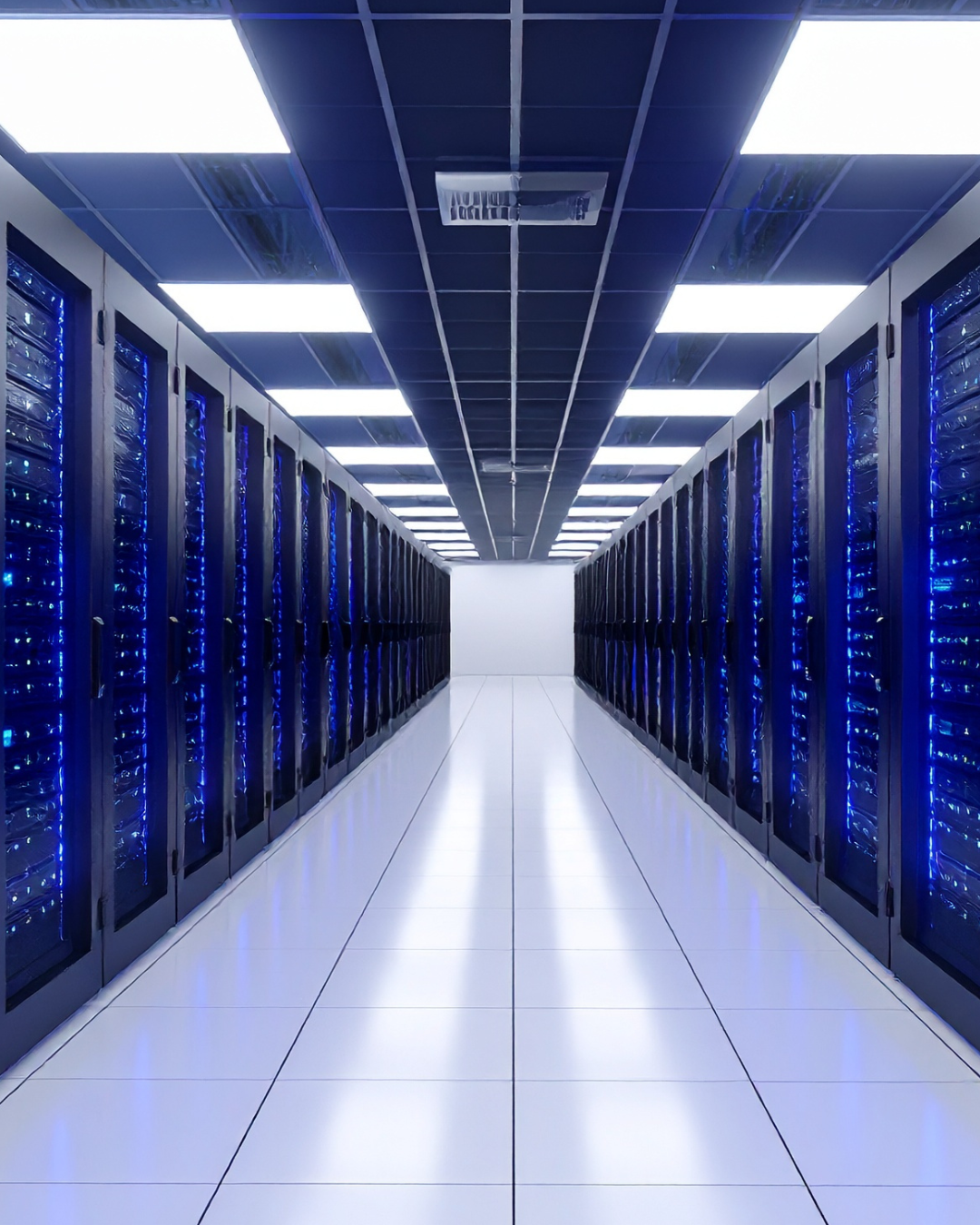
On-site power generation means producing electricity at or near the data center rather than depending entirely on electricity supplied through the utility grid.
Data centers can use several types of generation equipment, including natural gas turbines, reciprocating engines, and other distributed generation technologies. Gas turbines are one option for facilities that require significant amounts of power and need a reliable generation source.
For a data center, this means the generation system cannot be considered separately from the building’s mechanical and environmental systems.
What Are the Advantages of On-Site Power Generation for Data Centers?
1. Greater Control Over Power Availability
One of the primary advantages of on-site power generation is increased control over the facility’s electricity supply.
Data centers operate continuously and support infrastructure that cannot simply be shut down when the electrical grid experiences an interruption. On-site generation can provide an additional power source and can be incorporated into a broader resiliency strategy alongside utility power, UPS systems, backup generators, and other technologies.
This additional source of generation can be particularly valuable for facilities with very large or rapidly increasing electrical loads.
2. Supports Growing Data Center Power Demand
Modern data centers are becoming more power intensive, particularly as AI and high-density computing workloads expand.
Higher computing loads mean more electricity is required to operate servers and networking equipment. They also create additional heat that must be removed from the facility.
Eldridge identifies data centers as critical environments where temperature, humidity, airborne contaminants, and pressurization require careful control.
On-site generation can help address the power side of this equation while engineered ventilation and climate-control systems help manage the environmental conditions created by that additional power infrastructure.
3. Can Support Data Center Expansion
Electrical capacity can become a significant consideration when expanding a data center campus.
If utility infrastructure cannot immediately accommodate additional demand, on-site generation may provide another potential source of capacity. This can give operators greater flexibility as they add computing equipment, expand existing buildings, or develop new facilities.
The feasibility of on-site generation depends on numerous factors, including the available fuel supply, generation technology, permitting, emissions requirements, economics, and electrical system design.
4. Increased Energy Resiliency
Reliability is fundamental to data center design.
On-site generation can be integrated into a facility’s overall power architecture to create multiple layers of protection against power interruptions. Rather than relying on a single source, operators can develop systems in which different power resources work together.
The generation equipment itself, however, must also be reliable.
That makes proper ventilation and cooling an important part of the overall strategy.
What Are the Challenges of On-Site Power Generation for Data Centers?
While on-site generation can provide important benefits, it also introduces challenges that must be addressed during the design process.
1. Managing Heat From Power Generation Equipment
One of the biggest challenges is heat.
Gas turbines and other power-generation equipment produce significant amounts of heat during operation. If that heat is allowed to accumulate inside an enclosure, temperatures can rise beyond acceptable operating conditions and potentially contribute to equipment damage or premature wear.
Eldridge specifically identifies heat-load evaluation and engine cooling as critical considerations for power-generation applications.
A properly engineered ventilation system can help remove excess heat and introduce the appropriate amount of outside air.
This may require a combination of supply fans, exhaust fans, louvers, dampers, filters, blowers, and other equipment depending on the facility’s requirements.
2. Maintaining Proper Airflow and Static Pressure
Moving air through a large turbine enclosure is more complicated than simply selecting a fan with a high airflow rating.
The ventilation system needs to account for the entire airflow path, including fans, ductwork, louvers, dampers, filters, and other components. Static pressure also needs to be considered because it affects actual system performance.
Eldridge uses proprietary Fluid Flow Analysis software that allows multiple fan curves to be incorporated into the same model. Its ventilation design capabilities include heat-load evaluation, acoustic evaluation, fluid-flow analysis, equipment specification, project management, installation, and start-up.
This type of system-level analysis can help engineers understand how the ventilation system will perform as a whole rather than evaluating individual components in isolation.
3. Protecting Sensitive Data Center Equipment
The power-generation area is only one part of the facility.
Data centers contain sensitive electronic equipment that requires carefully controlled environmental conditions. Temperature, humidity, air quality, and pressure can all influence equipment performance and reliability.
This creates an important design challenge: the ventilation system supporting on-site generation must be engineered so that it does not negatively affect the environmental conditions required elsewhere in the facility.
4. Controlling Noise
Noise can be another major challenge.
Gas turbines, engines, exhaust systems, fans, and other mechanical equipment can produce significant sound. For data centers located near residential areas, businesses, or other occupied properties, noise levels may be subject to strict requirements.
Eldridge has decades of experience addressing noise requirements in power-generation and industrial applications. Its solutions include acoustic silencers and other noise-control equipment designed around specific project requirements.
Noise should be considered during the initial design process rather than treated as a problem to solve after the equipment is installed.
5. Designing for Outdoor Conditions
Outdoor temperature and weather conditions can significantly affect a turbine ventilation system.
A system designed for a hot climate may have very different requirements from one operating in a cold environment. Temperature, humidity, wind, and other environmental conditions can influence airflow requirements and equipment performance.
This illustrates why ventilation design should be based on the actual operating environment rather than a standard, one-size-fits-all configuration.
Why Is Ventilation Important for On-Site Data Center Power Generation?
Ventilation is essential because power-generation equipment must operate within an appropriate environmental range.
A properly designed system needs to accomplish several objectives at the same time:
- Remove heat generated by the turbine or engine
- Provide adequate combustion and cooling air
- Maintain appropriate airflow and static pressure
- Protect equipment from environmental conditions
- Address humidity and air quality concerns
- Meet applicable acoustic requirements
- Account for the facility’s physical layout
- Adapt to outdoor operating conditions
Eldridge’s approach begins with understanding the facility and its specific requirements. Its design capabilities include on-site ventilation surveys, heat-load evaluations, acoustic evaluations, fluid-flow analysis, CAD design, equipment specification, project management, equipment supply, installation, and start-up.
This comprehensive approach is particularly valuable for data centers because power generation, cooling, ventilation, and equipment reliability are closely connected.
How Should Data Centers Approach On-Site Power Generation?
The most effective approach is to consider on-site generation as part of the facility’s overall infrastructure rather than as an independent electrical project.
Before equipment is selected, engineers should evaluate the expected power requirements, generation technology, building configuration, heat load, airflow requirements, acoustic requirements, climate, equipment layout, and environmental conditions.
For gas turbine installations, the ventilation system should be designed around the actual turbine and enclosure rather than simply selecting standard fans after the building has already been designed.
The Role of Engineered Ventilation
There is no single ventilation solution that works for every data center power-generation project.
Building dimensions, turbine size, heat output, equipment arrangement, climate, airflow requirements, and noise restrictions can vary significantly.
That is why engineered ventilation can be an important part of an on-site generation project.
Eldridge provides ventilation equipment including axial fans, centrifugal fans and blowers, filters, louvers, dampers, gravity vents, heaters, dehumidifiers, and acoustic silencers.
These components can be selected and integrated based on the requirements of the individual facility.
Frequently Asked Questions About On-Site Power Generation for Data Centers
What is on-site power generation for a data center?
On-site power generation is the production of electricity at or near a data center rather than relying entirely on electricity supplied by the utility grid. Technologies can include natural gas turbines, reciprocating engines, and other distributed generation systems.
Why are data centers considering on-site power generation?
Data centers are considering on-site generation because of increasing electrical demand, the need for reliable power, grid capacity limitations, and the desire for greater control over power availability.
What are the biggest challenges of on-site power generation?
The biggest challenges include managing heat, maintaining proper airflow and static pressure, controlling noise, protecting sensitive equipment, addressing outdoor environmental conditions, and integrating the generation system with the rest of the facility.
Why is ventilation important for gas turbine power generation?
Gas turbines produce substantial amounts of heat. Proper ventilation helps remove that heat, provide required airflow, maintain appropriate environmental conditions, and support reliable equipment operation. Eldridge identifies heat-load evaluation, fluid-flow analysis, and acoustic evaluation as important parts of its ventilation design process.
Can gas turbines be used for on-site data center power generation?
Yes. Gas turbines can be used as an on-site power-generation option for data centers. However, the installation requires careful consideration of ventilation, cooling, airflow, static pressure, acoustics, equipment layout, and operating conditions.
How does noise affect on-site power generation?
Power-generation equipment and ventilation equipment can create significant noise. Acoustic evaluation and noise-control equipment, such as silencers, can help facilities meet project-specific sound requirements.
What should be considered when designing a data center turbine ventilation system?
Key considerations include heat load, airflow, static pressure, equipment layout, climate, humidity, filtration, acoustic requirements, and the relationship between the turbine enclosure and the rest of the data center.
Creating a Reliable Environment for On-Site Data Center Power
On-site power generation can offer data centers significant advantages as electricity demand continues to increase. It can provide greater control over power availability, support facility expansion, and contribute to a more resilient power strategy.
But generating power on-site also introduces new engineering requirements.
Gas turbines and other generating equipment create heat, airflow demands, noise, and environmental challenges that must be addressed as part of the facility design. For data centers, where reliability and environmental control are critical, these considerations cannot be treated as an afterthought.
An engineered ventilation strategy can help address these challenges by managing heat load, airflow, static pressure, acoustics, and environmental conditions.
With extensive experience in both power generation and critical-environment ventilation, Eldridge provides engineered ventilation and noise-control solutions designed around the specific requirements of each application. Its capabilities range from heat-load and fluid-flow analysis to equipment specification, project management, installation, and start-up.
For data centers pursuing on-site power generation, designing the ventilation system alongside the power-generation infrastructure can help create a more reliable environment for the equipment—and ultimately for the critical computing systems that depend on it.