
Choosing the appropriate motor is crucial for ensuring long-term, efficient operation of an industrial fan with minimal maintenance requirements. Drawing from our extensive 79-year experience in providing customers with cost-effective ventilation solutions, Eldridge has compiled essential tips for selecting an industrial fan motor.
Electricity Voltage and Phase
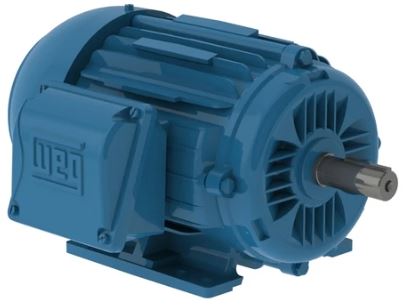 The most cost-effective configuration for motor operation typically involves 460 volts with 3 phase current. This setup not only minimizes initial purchase costs but also ensures optimal power consumption during operation. For installations without 3 phase electricity access, we typically suggest fans requiring motors below 3 horsepower. This is because single phase motors exceeding 3 horsepower tend to be costlier, require larger frames, and consume substantially more energy.
Motor Slip
A characteristic feature of all AC motors is their slip factor. This reduces their actual operating speed by 1% to 5% compared to their rated or synchronous speed. This factor varies based on the motor’s speed and horsepower specifications. For instance, a 5 hp motor rated at 1800 rpm typically operates at 1740 rpm, while a ½ hp motor with the same rating runs at 1725 rpm. This variation often creates confusion as manufacturers of motors and fans aren’t uniform in their use of actual versus rated speeds in specifications.
Motor Speed
Higher motor speeds correlate with several advantages: lower costs, compact frame dimensions, and reduced weight. Consequently, in situations where noise isn’t a concern, 3600 rpm motors are typically favored over 1800 rpm versions, which in turn are preferred over 1200 rpm motors.
Motor Speed Part Two
Traditional motor speed control relied on built-in two-speed capabilities. Modern approaches favor variable frequency drives (VFD) as a more economical solution for speed control. However, it’s essential to ensure the selected motor is specifically designed for VFD compatibility.
VFD Versus Motor Starter
Another reason to add a VFD to an industrial fan is that it can replace using a motor starter. Although a VFD costs a little more than a motor starter, you would have the ability to control the fan speed. A VFD also provides a slower in rush current when starting a motor which can extend motor life if it is turned on and off frequently.
Service Factor
Motors incorporate a service factor allowing operation above their rated horsepower. For example, a 5 hp motor with a 15% service factor can handle loads up to 5.75 hp. While it might seem economically advantageous to choose a motor operating continuously within its service factor rather than upgrading to the next size, this approach often proves costly in the long run. The reason why is that a motor operating in the service factor will generate more heat. This excess heat generation accelerates wear and tear, leading to premature motor failure. The expense of replacing a motor, particularly one mounted on a roof or high wall, significantly outweighs the initial cost savings of choosing a smaller motor.
Conclusion
These motor selection principles have proven their worth in industrial ventilation systems, with fans remaining operational for over two decades. For ventilation equipment that’s built to last a lifetime and exceed expectations, contact us and we will help you select an Eldridge Fan that is right for your application.