
Walk through almost any industrial manufacturing facility and you’ll notice the machinery, the smell of process chemicals, and the heat-generating equipment. What you might not immediately notice is the ventilation system working overhead to keep that environment safe, compliant, and productive. At the heart of many of these systems sits the upblast exhaust fan.
Whether you’re running a food processing plant, pulp and paper mills, or a heavy fabrication shop, upblast exhaust fans are a cornerstone of healthy air management. In this article, we’ll break down exactly what upblast exhaust fans are, how they work, and why choosing and maintaining them correctly can make all the difference in your operation.
What Is an Upblast Exhaust Fan?
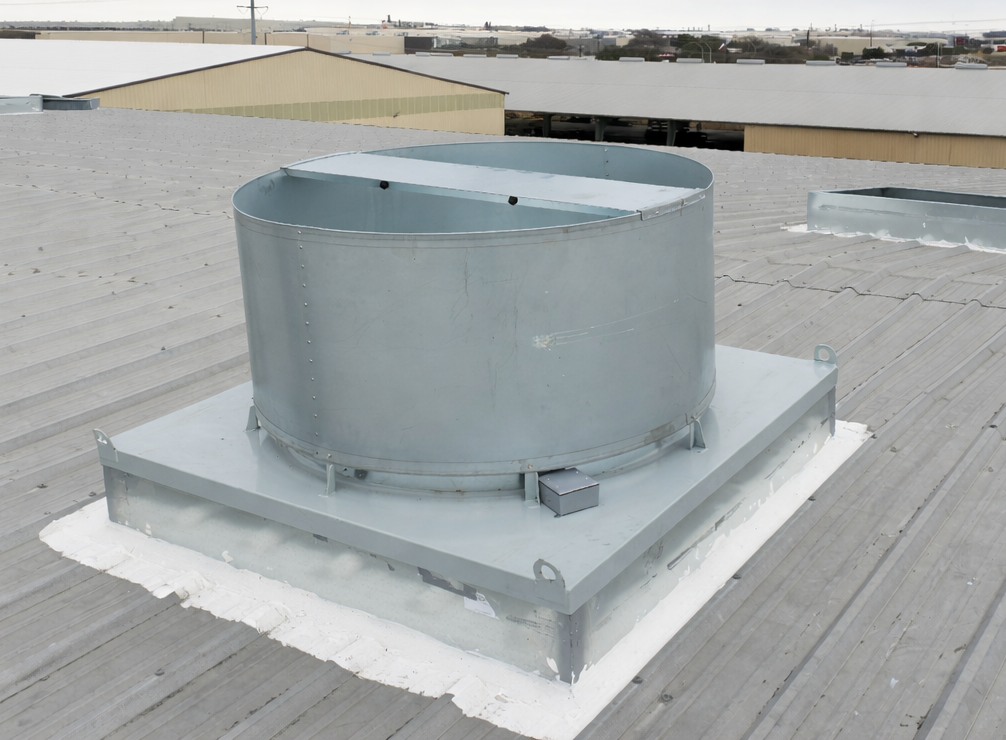
An upblast exhaust fan draws contaminated, hot, or odorous air out of a building. This industrial fan discharges the air vertically upward. Unlike standard exhaust fans that discharge air horizontally or at low angles, upblast fans direct airflow straight up. This is critical in industrial environments where the exhaust stream may carry particle-laden vapor, chemical fumes, smoke, or high-temperature air. These types of air can damage roofing materials or re-enter the building through nearby air intakes.
The fan is mounted on a roof curb. The parts of the fan consist of a motor, propeller, housing, butterfly dampers, and a discharge stack oriented vertically. Many models include backdraft dampers, spark-resistant construction options, and variable speed drives for energy management.
The Role of Upblast Fans in Industrial Manufacturing
 Industrial manufacturing generates a wide variety of airborne hazards. Welding and cutting operations produce metal fumes and particulate matter. Chemical processing generates solvent vapors and corrosive gases. Food production creates grease-laden vapor and steam. Plastics manufacturing releases volatile organic compounds (VOCs). Without an effective exhaust strategy, all of these contaminants accumulate. This can lead to serious consequences for human health, product quality, and equipment integrity.
Upblast exhaust fans are specifically engineered to handle this challenge at scale. Because they’re roof-mounted exhaust fans, they create a negative pressure differential inside the building that draws polluted air upward and out before it can settle into the work zone or circulate through the facility. The vertical discharge trajectory ensures that exhausted air clears the roofline entirely rather than re-entering through adjacent windows, doors, or makeup air units.
Worker Safety and Air Quality
The most important reason to invest in an upblast exhaust system is the health and safety of your workforce. The Occupational Safety and Health Administration (OSHA) and the National Institute for Occupational Safety and Health (NIOSH) have established permissible exposure limits (PELs) for hundreds of industrial airborne contaminants. Chronic exposure to fumes, vapors, and fine particulates can cause respiratory disease, neurological damage, and cancer.
Properly designed upblast ventilation systems dilute and remove contaminants before they reach harmful concentrations. In operations involving combustible dusts or flammable vapors, adequate exhaust ventilation is also a fire and explosion prevention measure. Spark-resistant fan options — featuring non-sparking construction and explosion-proof motors — add an additional layer of protection in these high-risk environments.
Beyond toxicology and fire safety, thermal comfort matters too. In facilities where furnaces, ovens, or high-heat processes are running continuously, ambient temperatures can rise to dangerous levels without sufficient air exchange. Upblast fans provide the airflow capacity to manage heat load, protecting workers from heat stress and maintaining safe conditions year-round.
Equipment Protection and Process Integrity
Airborne contaminants don’t just threaten workers — they threaten your equipment and production quality as well. Grease, chemical vapors, and fine particulates can coat motors, sensors, and control panels, leading to premature failures and costly downtime. In precision manufacturing environments like electronics fabrication or pharmaceutical production, airborne contamination can compromise product quality and trigger expensive batch rejections.
A well-designed upblast exhaust system removes these contaminants at the source or before they migrate to sensitive areas of the facility. By maintaining a clean air environment, manufacturers can extend the service life of their equipment, reduce maintenance frequency, and protect the integrity of their products — all of which directly improve the bottom line.
Regulatory Compliance and Code Requirements
Industrial ventilation is not optional — it’s mandated. OSHA standards, the International Mechanical Code (IMC), the National Fire Protection Association (NFPA) codes, and local building codes all impose specific requirements. For food processing operations, the NFPA 96 standard specifically requires exhaust systems to use upblast fans to ensure they discharge vapors safely above the roofline.
Failure to meet these requirements exposes manufacturers to OSHA citations, shutdowns, higher insurance premiums, and civil liability. Specifying and installing code-compliant upblast exhaust fans helps companies stay compliant from the start. Maintaining ventilation system documentation also keeps you on the right side of regulators.
Choosing the Right Upblast Exhaust Fan for Your Application
Not all upblast exhaust fans are created equal. Selecting the wrong model can mean inadequate ventilation, excessive energy consumption, or accelerated mechanical failure. Key selection criteria include airflow capacity, static pressure rating, temperature rating, spark resistance classification, noise level, and motor efficiency.
For heavy-duty industrial applications, engineers typically prefer belt-driven axial upblast fans. These fans have the ability to handle demanding conditions, with the motor outside the airstream. For lighter-duty or makeup air-assisted applications, direct-drive models offer a more compact and lower-maintenance option.
Working with a qualified engineer or industrial ventilation specialist will ensure you get the performance you need.
Maintenance: Protecting Your Investment
An upblast exhaust fan that isn’t maintained is a liability. Contaminant buildup on propellers and housings creates a significant fire risk and dramatically reduces airflow efficiency. Worn belts, failing bearings, and unbalanced propellers lead to noisy, inefficient operation and eventual motor failure. An unplanned fan failure can unexpectedly force a production shutdown while evacuating workers from a contaminated environment.
A proper preventive maintenance program for upblast exhaust fans should include regular inspection and cleaning of housings and propellers, belt tension and condition checks, lubrication of bearings per manufacturer specifications, motor amp draw monitoring to detect early mechanical issues, and roof curb and flashing inspection to prevent water intrusion. Many facilities are now integrating fan monitoring into their building automation systems to enable predictive maintenance.
The Bottom Line
Although upblast exhaust fans may not be the most glamorous line item, they are among the most consequential. They protect the people on your floor, preserve the equipment in your facility, keep your operation compliant, and safeguard the quality production. In the demanding environment of industrial manufacturing, investing in the right ventilation infrastructure is simply good business. Contact an Eldridge ventilation engineer today for more information.